• Skip to primary navigation
  • Skip to main content
  • Skip to primary sidebar
  • Skip to footer

Johns Hopkins Vasculitis Center

Show Search
Hide Search
  • About Our Center
    • Appointments and Directions
    • Meet Our Team
    • Support Our Center
  • What is Vasculitis?
    • Types of Vasculitis
    • Causes of Vasculitis
    • Symptoms of Vasculitis
    • Diagnosing Vasculitis
  • Vasculitis Treatments
    • Prednisone
    • Avacopan (Tavneos®)
    • Apremilast (Otezla®)
    • Azathioprine
    • Colchicine
    • Cyclophosphamide (Cytoxan)
    • Dapsone
    • Supplemental Immunoglobulin (IVIG/SCIG)
    • Leflunomide
    • Mepolizumab (Nucala®)
    • Methotrexate (MTX)
    • Mycophenolate
    • Rituximab
    • Sarilumab (Kevzara®)
    • TNF Inhibitors
    • Tocilizumab (Actemra®)
  • Vasculitis Research
  • Resources
Home / Search for "search.html/page/cryoglobulinemia.html"

Search Results for: search.html/page/cryoglobulinemia.html

Research Information

Research Information

Research and clinical trials are essential for the advance of medicine. The effectiveness of each new breakthrough can only be assessed by putting them into practice with individuals affected by the disease.

For those who care about vasculitis and discovering new ways to identify, diagnose, and treat these diseases, there are many ways to support the advancement of research. Volunteer participation in clinical trials is one way to help progress knowledge about the various types of vasculitis. As a volunteer, your participation can help potentially new, successful treatments become available to others who understand living with vasculitis as you do. For certain non-medication based studies, a volunteer may be any individual who is willing to participate. Volunteers can be spouses, friends and family members who wish to make a difference in vasculitis research.

Open Research Studies

Clinical Epidemiology and serological/plasma and genetic factors in systemic vasculitis

Purpose of Study:

This research is being done to gather information about patients with certain vasculitis diagnoses. The Johns Hopkins Vasculitis Center is building a comprehensive database of information concerning vasculitis patients as part of its mission to facilitate research.

Recruiting patients:

  • Diagnosed with vasculitis
  • Patients of the Johns Hopkins Vasculitis Center

Coordinator/Contact: Hannah Smith
Email: hsmith97@jh.edu
Phone number: 410-550-0122
Principal Investigator: Duvuru Geetha, M.D.
IRB#: IRB00355688

A Randomized, Double-blind, Placebo-controlled Phase 4 Clinical Trial to Evaluate the Long-term Safety and Efficacy of Avacopan in Subjects With Antineutrophil Cytoplasmic Antibody (ANCA)-associated Vasculitis

Purpose of the Study:

This study is to make sure the medicine called avacopan is safe to use for a long time. It will check for liver problems and serious allergic reactions. It will also track the medicine keeps the illness in remission, kidney function, and how the treatment affects daily life.

Recruiting patients:

  • Newly diagnosed or relapse of GPA or MPA
  • Age 18 years or older
  • Positive test for anti-PR3 or anti-MPO (current or historic) antibodies
  • Patients of the Johns Hopkins Vasculitis Center

Coordinator/Contact: Hannah Smith
Email: hsmith97@jh.edu
Phone number: 410-550-0122
Principal Investigator: Duvuru Geetha, M.D.
IRB#: IRB00403470

Frequently Asked Questions about Clinical Trials

From the definition of a clinical trial to information and questions that are good to ask your doctor before participating in a trial, this section address many of the common questions that arise when deciding to join in supporting vasculitis research.

What is a clinical trial?

A clinical trial is a type of research study. Clinical trials test a new treatment and compare it to the available treatment (the usual way doctors treat a certain health condition or disease). For example, a clinical trial might study how well a new medicine helps people with cancer or if certain foods help people stay healthy. The Food and Drug Administration requires clinical trials before a new medication can be approved. Sometimes it is necessary to compare an experimental treatment with a placebo (inactive treatment) when no standard treatment exists.

FDA Consumer magazine published this article “Inside Clinical Trials Testing Medical Products in People” which may assist in understand the purpose, process and procedure of clinical trials from the Food and Drug Administrative’s perspective. 

Why should I take part in a clinical trial?

Because the trials are investigations designed to learn more about a specific disease or treatment, personal benefit cannot be guaranteed. The benefits of taking part in a clinical trial depend on the study you join. The benefits also depend on your assigned study group. Here are some possible benefits you might get from taking part in a clinical trial. You may:

  • get free health exams;
  • learn more about your health;
  • take a more active role in your own health care;
  • have your health watched closely;
  • receive some medications at no cost to you; and help answer research questions that may mean better health for people in the future.

What are the risks of taking part in a clinical trial?

There are risks to you when you take part in a clinical trial. The study doctors and coordinators will watch you carefully for any changes in your health. You are always free to leave the study. The risks will vary depending on the kind of trial you join. Here are some possible risks.

  • You may have side effects (health problems) from taking a new medicine or getting a new procedure that is being tested. There may be side effects that are unexpected. Usually you will need to give blood samples. Some people find that process uncomfortable.
  • The visits for the clinical trial may be frequent and time consuming.

The therapy you receive may not be effective or you may be assigned to a placebo group

How do I know if I have been given all the information I need about taking part in a clinical trial?

When beginning any study the doctor, or investigator, must ask approval from an Institutional Review Board (IRB). The IRB is a committee of doctors and other medical personnel that have no ties to the study. The IRB makes sure the study is as safe as possible and that the “informed consent” explains all of the important information to the patient.

Before people join a clinical trial, they go through something called the “informed consent process”. This process means that you are given written information that tells you about the purpose of the study; risks and benefits of being in the study; and what will happen to you in the study. You will be given an informed consent form, which you will need to read over very carefully. Take the form home and share it with family members, friends, and your primary care doctor. Once you have read the form, ask questions about words or procedures that you don’t understand.

Another part of the informed consent process is that you can ask questions about the study at any time. It is your right to have all the information you need to make your decision about whether or not to take part in a clinical trial. Don’t let anyone pressure you into taking part in a clinical trial. The choice is yours.

What if I decide that I don’t want to be a part of the study, even though the study has already started?

That’s okay. You can change your mind and leave the study at any time. Remember that being a part of a clinical trial is always your choice. Your relationship with your doctor will not change because you decide to leave the study. Your care will not be affected in any way.

Who takes part in clinical trials?

Many different people take part in clinical trials. People who take part in clinical trials are volunteers who meet eligibility criteria for the study. Eligibility criteria are requirements that someone must meet to be a part of the study. Some examples of eligibility criteria are having a certain disease such as Wegener’s Granulomatosis (WG); not showing improvement on standard WG medications; being a certain age; or being in good health. These criteria help make sure that the study answers the right research question.

Is it safe to participate in a clinical trial if trying to conceive a child or pregnant?

Check with your doctor or the study coordinator to find out if it is safe to participate in a particular study if you are trying to conceive, if you are pregnant or postpartum. If the trial is assessing medications, there is often concern about how medicines used in a study could affect a pregnancy regardless of being male or female. The informed consent form should tell you if any of the medicines in the study could affect a pregnancy.

For women, if you are postpartum and breast feeding, check with your doctor to make sure it is okay to breast feed your baby while you are taking part in a clinical trial. Don’t be afraid to ask questions about safety.

How can I find out about clinical trials or other research studies at the Johns Hopkins Vasculitis Center ?

If you would like more information about one of our research activities or if you would like to be a participant, please contact the Johns Hopkins Vasculitis Center.
Cryoglobulinemia

  • Description
  • In medical terms, by David Hellmann, M.D.

The name literally means “cold antibody in the blood”, which refers to the chemical properties of the antibodies that cause this disease: cryoglobulins are antibodies that precipitate under cold conditions. Drug use is a prime risk factor for cryoglobulinemia because more than 90% of cases of cryoglobulinemic vasculitis are associated with hepatitis C infections. Hepatitis C is acquired by injection drug use (needle–sharing), tainted blood products, and (probably rarely), sexual transmission. Treatment of the underlying hepatitis may be an effective therapy for this type of vasculitis.

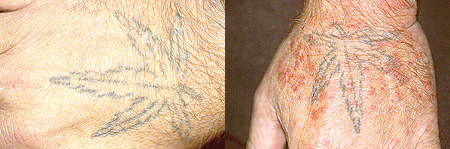
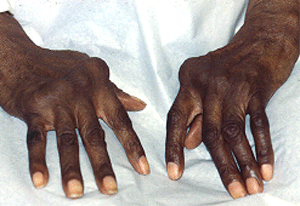
Pictured below is the hand from the same patient at different times. The image on the left is normal and the one on the right shows the patient in the midst of a flare of cryoglobuinemic vasculitis.

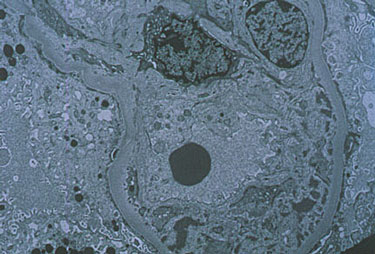
Pictured below is an electron micrograph of a kidney biopsy specimen from a patient with cryoglobulinemia.

In medical terms, by David Hellmann, M.D.

A discussion of Cryoglobulinemia written in medical terms by David Hellmann, M.D. (F.A.C.P.), Co-Director of the Johns Hopkins Vasculitis Center, for the Rheumatology Section of the Medical Knowledge Self-Assessment Program published and copyrighted by the American College of Physicians (Edition 11, 1998). The American College of Physicians has given us permission to make this information available to patients contacting our Website.

Cryoglobulins are immunoglobulins that precipitate in the cold and disolve on rewarming. Three types of cryoglobulins are distinguished based on whether the cryoglboulin is monoclonal and has rheumatoid factor activity. Knowing the type usually allows the physician to predict the clinical features; alternatively knowing the clinical features allows one to deduce the type of cryoglobulin. Type I is a monoclonal antibody that does not have rheumatoid factor activity. Most commonly, type I is associated with lymphoma, Waldenström’s macroglobulinemia, and multiple myeloma. Because type I cryoglobulins do not easily activate complement, patients with type I are asymptomatic until the level of cryoglobulinemia is sufficiently high to cause hyperviscosity syndrome. Both types II and III are rheumatoid factors — antibodies that bind to the Fc fragment of IgG. Therefore, both types are called mixed cryoglobulins. In type II, the rheumatoid factor is monoclonal, whereas in type III it is polyclonal. Type II is associated with lymphoproliferative diseases, and both types can occur in patients with rheumatic diseases and chronic infections. Cryoglobulinemia is said to be essential when there is no identifiable underlying disease. Type II and III cryoglobulinemia frequently presents as vasculitis, most commonly with recurrentlower extremity purpura, glomerulonephritis, and peripheral neuropathy.

It is now evident that most patients diagnosed with type II or type III mixed essential cryoglobulinemia have the disease as an immune response to chronic hepatitis C infection. The role of hepatitis C virus is suggested by finding that the cryoglobulins in these patients are enriched with anti–hepatitis C antibody and hepatitis C RNA. Moreover, antviral therapy can remit the disease in some patients.

Treatment depends on the type of cryoglobulin, underlying disease, and severity of symptoms. Cryoglobulinemia with severe hyperviscosity syndrome requires plasmapheresis and chemotherapy of the underlying malignancy. Some patients with cryoglobulinemia suffer from mild, recurrent crops of lower extremity purpura that require no specific therapy. More extensive vasculitis associated with autoimmune diseases or essential cryoglobulinemia may respond to prednisone, cyclophosphamide, or both. The most effective treatment for cryoglobulinemia associated with hepatitis C has not yet been determined. Brief use of prednisone followed by 6 months of interferon alfa has produced clinical and liver function test improvement, but relapse of liver disease and vasculitis often occurs when interferon alfa is stopped.

How to Support the Johns Hopkins Vasculitis Center

Advancing vasculitis research to improve diagnosis and treatment is critical for the care of our patients and important to the overall mission of our Center. We are successful in our mission only because of the combined efforts of all members of our Johns Hopkins Vasculitis Center team and their valuable contributions:

  1. Dedicated physicians and research investigators
  2. Generous patients who selflessly contribute their time and samples
  3. Financial contributions to support vasculitis research

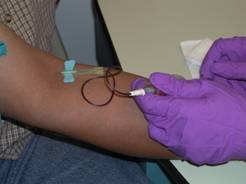
We welcome you to consider becoming a participant in one of our research studies related to vasculitis. Many studies involve little more than donating a blood sample during one of your appointments.

Often grateful patients, family members, and friends ask what they can do to support the work of the Johns Hopkins Vasculitis Center.  Financial support for medical research directly benefits our patients. For this reason, we have established the Discovery Fund for Vasculitis Research.
Although grants support some of our research and patient education projects, monetary gifts from individuals who realize the importance of these efforts play an essential role in maintaining the Johns Hopkins Vasculitis Center as a Center of Excellence.

We would like to share with you one such inspiring story:

Linda’s Loop – Linda Gray’s Family “hits the trail” in her honor 

We are happy to discuss research in progress with all current and potential donors. Please contact us at the Center directly to learn more about making a tax deductible contribution:

The Johns Hopkins Vasculitis Center

Bayview Medical Center
5501 Hopkins Bayview Circle
JHAAC, Room 1B.1A
Baltimore, Maryland  21224

Phone: 410-550-6825

Anna Dugan
Director of Development
Office: 443-571-7207
Email: adugan3@jh.edu

All information contained within the Johns Hopkins Vasculitis Center website is intended for educational purposes only. Visitors are encouraged to consult other sources and confirm the information contained within this site. Consumers should never disregard medical advice or delay in seeking it because of something they may have read on this website.

Resources

Living with vasculitis can be challenging at times due to the complex nature of the disease and therapies. Also, vasculitis in the general population is quite rare, especially compared to other common medical conditions, such as diabetes and hypertension (high blood pressure). This can make patients with vasculitis feel misunderstood or alone. It can be very helpful for individuals with vasculitis to connect with other patients and their families.

If you have vasculitis, you are not alone. There is a strong community of patients and physicians to support you.

  • Vasculitis Foundation (USA) – www.vasculitisfoundation.org
  • Vasculitis UK – www.vasculitis.org.uk/
  • Vasculitis Foundation Canada – www.vasculitis.ca/
  • American Behcet’s Disease Association
  • Churg-Strauss Syndrome Association
  • Cryoglobulinemia Home Page
  • Arthritis Foundation
  • The American College of Rheumatology
  • European Vasculitis Study Group: EUVAS Homepage

Rheumatoid Vasculitis

  • First Description
  • Who gets Rheumatoid Vasculitis (the “typical” patients)?
  • Classic symptoms of Rheumatoid Vasculitis
  • What causes Rheumatoid Vasculitis?
  • How is Rheumatoid Vasculitis diagnosed?
  • Treatment and Course of Rheumatoid Vasculitis
  • What’s new in Rheumatoid Vasculitis?

First Description

Rheumatoid Vasculitis (RV) is an unusual complication of longstanding, severe rheumatoid arthritis. The active vasculitis associated with rheumatoid disease occurs in about 1% of this patient population.

RV is a manifestation of “extra-articular” (beyond the joint)rheumatoid arthritis and involves the small and medium-sized arteries in the body. In many of its disease features, RV resembles polyarteritis nodosa.

Other common extra-articular manifestations of rheumatoid arthritis, such as inflammation in the sac surrounding the heart (pericarditis), inflammation in the lining of the lungs (pleuritis), and interstitial lung disease (resulting in fibrosis or scarring of the lungs).

Who gets Rheumatoid Vasculitis? A typical patient

RV can affect a person from any ethnic background, either gender, and from any age group. However, more often than not, the typical patient has long-standing rheumatoid arthritis with severe joint deformities from the underlying arthritis. Although the arthritis has usually led to significant joint damage, at the onset of RV the joint disease is paradoxically quiet.

Figure: Patient with joint damage from rheumatoid arthritis. Note the bulbous swelling of some knuckles and lateral (ulnar) deviation of the fingers.

Classic symptoms of Rheumatoid Vasculitis

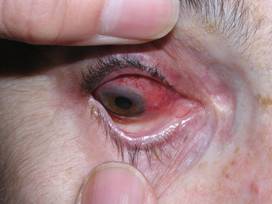
RV has many potential signs and symptoms. The manifestations of RV can involve many of the body’s different organ systems, including but not limited to the skin, peripheral nervous system (nerves to the hands and feet) , arteries of the fingers and toes causing digital ischemia, and eyes with scleritis. Scleritis (inflammation of the white part of the eye) commonly occurs in the setting of RV. This ocular complication requires urgent treatment with immunosuppressive medications.

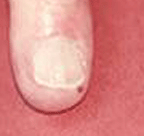
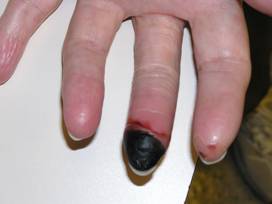
Figure: Digital ischemia – this image shows a blood flow deficiency in the tip of the finger caused by an obstruction of the digital artery.

Figure: Scleritis – Inflammation of the sclera (the white of the eye) causing redness, light sensitivity and pain.

In addition, generalized symptoms such as fever and weight loss are common.

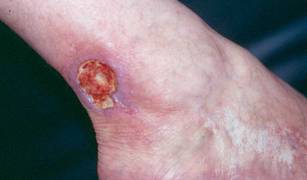
As is true with other forms of vasculitis that involve the skin, cutaneous lesions can erupt on various areas of the body in RV, with a predilection for the lower extremities. Typical findings include ulcers concentrated near the ankles.

Figure: Cutaneous ulcer – an open skin sore caused by an obstruction of the small blood vessels in the superficial ulcers or obstruction of medium vessels in a deeper ulcer.

Small nail fold infarcts (small spots around fingernail) can

occur in rheumatoid arthritis

but these do not necessarily signify the presence of systemic vasculitis and do not necessitate a change in rheumatoid arthritis treatment.

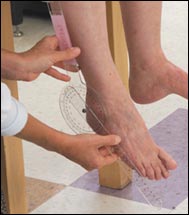
Nerve damage can cause foot or wrist drop, known in medical terminology as “mononeuritis multiplex”. The images below show a patient with a right wrist drop and a patient with right foot drop. This condition, which may be significantly disabling, is often preceded by a change in sensation in the same area (numbness, tingling, burning, or pain). These abnormal sensations can progress to muscle weakness, focal paralysis, and eventually to muscle wasting. Recovery from this condition, caused by nerve infarction, can take months. In some cases, recoveries from mononeuritis multiplex are incomplete.

Figures of drop wrist and drop foot (courtesy of the University of North Carolina)

(Video of drop foot viewable on our Microscopic Polyangiitis page under classic symptoms.)

Laboratory Tests

Most laboratory findings in RV – for example, elevations in the erythrocyte sedimentation rate or C-reactive protein – are non-specific, and reflect the presence of a generalized inflammatory state. Hypocomplementemia, anti-nuclear antibodies (ANA), and atypical anti-neutrophil cytoplasmic antibodies (ANCA) are common. Rheumatoid factor levels are usually extremely elevated. However, there is no definitive laboratory test for RV short of a tissue biopsy. The diagnosis must usually be made using a combination of history, physical examination, pertinent laboratory investigations, specialized testing (e.g., nerve conduction studies), and sometimes a tissue biopsy.

Because the treatment implications for RV are major, any diagnostic uncertainty must be met with definitive approaches to establishing the diagnosis. This usually involves biopsy of an involved organ. Deep skin biopsies (full-thickness biopsies that include some subcutaneous fat) taken from the edge of ulcers are very useful in detecting medium-vessel vasculitis. Nerve conduction studies help identify involved nerves for biopsy. Muscle biopsies (e.g., of the gastrocnemius muscle) should be performed at the same time as nerve biopsies, to increase the chance of finding changes characteristic of vasculitis. Imaging studies have no consistent role in the evaluation of RV, although sometimes angiography of the gastrointestinal tract is useful.

What Causes Rheumatoid Vasculitis?

The cause of RV is unknown, but given the prominence of immune components and the pathologic changes in involved blood vessels, an auto-immune process is suggested.

How is Rheumatoid Vasculitis diagnosed?

Most laboratory findings in RV – for example, elevations in the erythrocyte sedimentation rate or C-reactive protein are non-specific, and reflect the presence of a generalized inflammatory state. Hypocomplementemia, anti-nuclear antibodies (ANAs), and atypical anti-neutrophil cytoplasmic antibodies (atypical ANCAs) are common. Rheumatoid factor levels are extremely elevated, as a rule. However, there is no definitive laboratory test for RV short of a tissue biopsy. The diagnosis must usually be made by the combination of history, physical examination, pertinent lab work, other specialized testing (e.g., nerve conduction studies), and sometimes even a tissue biopsy is required.

The diagnosis of RV should be considered in any rheumatoid arthritis patient who develops new constitutional symptoms, skin ulcerations, decreased blood flow to the fingers or toes, symptoms of a sensory or motor nerve dysfunction (numbness, tingling, focal weakness); or any inflammation of the lining around the heart or lungs (pericarditis or pleurisy/pleuritis).

Patients with a history of joint-destructive rheumatoid arthritis are at an increased risk for infection. Therefore, when a rheumatoid arthritis patient presents with a new onset of non-specific systemic complaints an infection must first be eliminated. Patients with rheumatoid arthritis typically have immune systems that are disordered from previous immunosuppression and underlying disease (e.g., joint damage). This patient population, therefore, is at higher risk of infection.

The differential diagnosis of RV includes:

  • Cholesterol embolization syndromes, in which a piece of cholesterol breaks off of a plaque, may cause digital ischemia (blood flow obstruction to a finger or toe), and a host of other symptoms that mimic vasculitis.
  • Diabetes mellitus is another major cause of mononeuritis multiplex, but multiple mononeuropathies occurring over a short period of time are unusual in diabetes.
  • Many clinical features of RV mimic those of polyarteritis nodosa, cryoglobulinemia, and other forms of necrotizing vasculitis. Therefore they too should be considered in this setting.

Because the treatment implications for RV are major, any diagnostic uncertainty must be met with a definitive approach to establishing the diagnosis. As alluded to earlier, this usually involves the biopsy of an involved organ. Deep skin biopsies (full-thickness biopsies that include some subcutaneous fat) taken from the edge of ulcers are very useful in detecting medium-vessel vasculitis. Nerve conduction studies help identify involved nerves for biopsy. Muscle biopsies (e.g., of the gastrocnemius muscle) should be performed at the same time as nerve biopsies, to increase the chance of finding changes characteristic of vasculitis. Imaging studies have no consistent role in the evaluation of RV, although sometimes angiography of the gastrointestinal tract is useful.

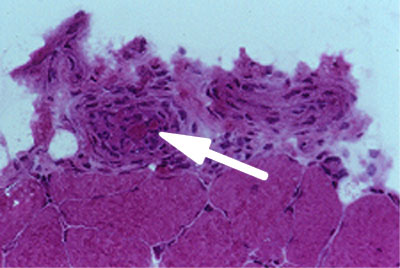
Normally, the cells of the blood vessel wall would be fewer in number (less thick) and the lumen (larger red area) would be larger. The arrow points (Figure 6, left) to an inflamed blood vessel found on a muscle biopsy. The globular pink areas are muscle fibers.

Treatment and Course of Rheumatoid Vasculitis

Therapy should reflect the severity of organ involvement. Prednisone or other steroid therapies are often the first line of treatment. Optimizing treatment of the underlying rheumatoid arthritis is also essential, therefore medications such as methotrexate or tumor necrosis factor inhibitors may be employed. In the setting of impending damage to major organs such as the eyes, a peripheral nerve, the gastrointestinal tract, or of a severe skin ulceration, cyclophosphamide is usually warranted.

What’s New in Rheumatoid Vasculitis?

Compared to other forms of vasculitis, there has been relatively little research in recent years on the specific entity of RV. The lack of similarity in available reports on RV and discrepancies in case definitions have created challenge to building standard approaches to the diagnosis and treatment of this condition. There is some evidence that the incidence of RV has decreased over the past several decades, perhaps because of better treatment of the underlying rheumatoid arthritis.

Welcome to the Johns Hopkins Vasculitis Center

Welcome to the Johns Hopkins Vasculitis Center

Dear Vasculitis Center Website Visitor:

SEO

Welcome to the Johns Hopkins Vasculitis Center Website. This Website, maintained by the Physicians, Research Coordinators, and Patient Care Coordinators at our Center, is designed to provide information for patients with vasculitis in language that non-medical people can understand. We recognize that many patients with vasculitis have never heard of their disease before they became sick and that, owing to the relative rarity of some types of vasculitis, most physicians have little experience treating the disorders. Few support groups for vasculitis patients exist, and there is a shortage of literature about these diseases written for lay people. Consequently, most patients find reliable information about vasculitis difficult to come by.

At this Website you will find:

  1. explanations of vasculitis in lay terms
  2. specific discussions of individual diseases
  3. a review of the common therapies for vasculitis
  4. answers to commonly asked questions
  5. information on how to make an appointment to be seen in the Johns Hopkins Vasculitis Center
  6. information about ongoing research at the Johns Hopkins Vasculitis Center
  7. ways in which you can contribute to advancing research and progress in vasculitis.

Please note that this Website is sponsored through the generosity of various friends of the Johns Hopkins Vasculitis Center. We update the Vasculitis Center Website regularly and strive to provide solid, usable information on various types of vasculitis, treatments, and support resources.
Thank you for visiting our Website. We hope you will find it accessible and useful as you learn about these challenging diseases.

Yours truly,

Philip Seo, MD, MHS
Assistant Professor of Medicine
Johns Hopkins University School of Medicine,
Division of Rheumatology
Director, The Johns Hopkins Vasculitis Center

  • Go to page 1
  • Go to page 2
  • Go to page 3
  • Go to Next Page »

Primary Sidebar


donate to the Johns Hopkins Vasculitis Center

All information contained within the Johns Hopkins Vasculitis Center website is intended for educational purposes only. Visitors are encouraged to consult other sources and confirm the information contained within this site. Consumers should never disregard medical advice or delay in seeking it because of something they may have read on this website.

Footer

Johns Hopkins Rheumatology

  • Johns Hopkins Rheumatology
  • Johns Hopkins Arthritis Center
  • Johns Hopkins Lupus Center
  • Johns Hopkins Lyme Disease Research Center
  • Johns Hopkins Myositis Center
  • Johns Hopkins Scleroderma Center
  • Johns Hopkins Sjögren’s Syndrome Center

Connect With Us

  • Facebook
  • Twitter
  • YouTube
U.S. News and World Report Rankings Badge

Johns Hopkins Medicine Johns Hopkins Medicine logo
Language Assistance Available:
  • Español
  • American Sign Language
  • עִברִי
  • אידיש
  • አማርኛ
  • 繁體中文
  • Français
  • Tagalog
  • Русский
  • Português
  • Italiano
  • Tiếng Việt
  • Ɓàsɔ́ɔ̀-wùɖù-po-nyɔ̀
  • Igbo asusu
  • èdè Yorùbá
  • বাংলা
  • 日本語
  • 한국어
  • Kreyòl Ayisyen
  • العربية
  • Deutsch
  • Polski
  • Ελληνικά
  • ગુજરાતી
  • ภาษาไทย
  • اُردُو
  • فارسی
  • हिंदी
  • Deitsch
  • ខ្មែរ
  • မြန်မာ
Contact & Privacy Information
Price Transparency
Notice of Privacy Practices Privacy Statement
Terms & Conditions of Use Non-Discrimination Notice
Manage Cookie Preferences
Copyright © 2025 Johns Hopkins Rheumatology