• Skip to primary navigation
  • Skip to main content
  • Skip to primary sidebar
  • Skip to footer

Johns Hopkins Vasculitis Center

Show Search
Hide Search
  • About Our Center
    • Appointments and Directions
    • Meet Our Team
    • Support Our Center
  • What is Vasculitis?
    • Types of Vasculitis
    • Causes of Vasculitis
    • Symptoms of Vasculitis
    • Diagnosing Vasculitis
  • Vasculitis Treatments
    • Prednisone
    • Avacopan (Tavneos®)
    • Apremilast (Otezla®)
    • Azathioprine
    • Colchicine
    • Cyclophosphamide (Cytoxan)
    • Dapsone
    • Supplemental Immunoglobulin (IVIG/SCIG)
    • Leflunomide
    • Mepolizumab (Nucala®)
    • Methotrexate (MTX)
    • Mycophenolate
    • Rituximab
    • Sarilumab (Kevzara®)
    • TNF Inhibitors
    • Tocilizumab (Actemra®)
  • Vasculitis Research
  • Resources
Home / Search for "search.html/whatis/polyangiitis.html/whatis/diagnosis.html"

Search Results for: search.html/whatis/polyangiitis.html/whatis/diagnosis.html

Causes of Vasculitis

There are many different types of vasculitis, some with different causes than others.

Certain forms of vasculitis that can be due to infection where the microbe directly invades the vessel wall. Syphilis is one example of vasculitis that can be caused by infection in the blood vessel. Treating the infection is the main goal in managing this sort of vasculitis, which is not an autoimmune disease, but rather an infection.

Other infections can provoke the immune system into causing damage in blood vessels. Here, the infection is the trigger, but the immune system is the cause of the vascular damage. Viral hepatitis (B and C) are examples of this sort: some patients with Hepatitis B may develop polyarteritis nodosa, while some patients with Hepatitis C may develop cryoglobulinemic vasculitis.

Other types of vasculitis may be due to an ‘allergic‘-type reaction to medications. For example, certain blood pressure medications (hydralazine) or thyroid medications (propylthiouracil) can trigger ANCA associated vasculitis in some patients. Cocaine is an illicit drug that is linked to vasculitis and vascular damage.

However, the causes of most vasculitides are currently unknown. While we can identify some risk factors (such as older age in giant cell arteritis), we do not know the specific causes of these diseases. These forms of vasculitis of unknown cause are considered autoimmune diseases.

Under normal circumstances, our immune system serves to defend us from infection and other threats, such as cancers. In autoimmune diseases, the immune system generates a response not against a foreign threat, but against normal “self” tissues. This abnormal immune response against “self” tissues can result in a wide array of autoimmune diseases, including relatively common diseases (such as psoriasis or thyroid disease) as well as rare conditions (such as vasculitis).

In most cases, autoimmune diseases are believed to be due to an abnormal immune response that is generated in a susceptible person, and eventually leads to a cycle of ongoing inflammation in otherwise normal tissues where no infection or other identifiable threat is present. Some interaction between the immune system and the environment is thought necessary for this to occur, and a person’s genetic background likely places some individuals at higher risk than others.

A better understanding of the specific causes of these diseases would lead to improved means of diagnosing, treating, and even preventing these conditions. Uncovering the causes of vasculitis is a major goal of vasculitis research.

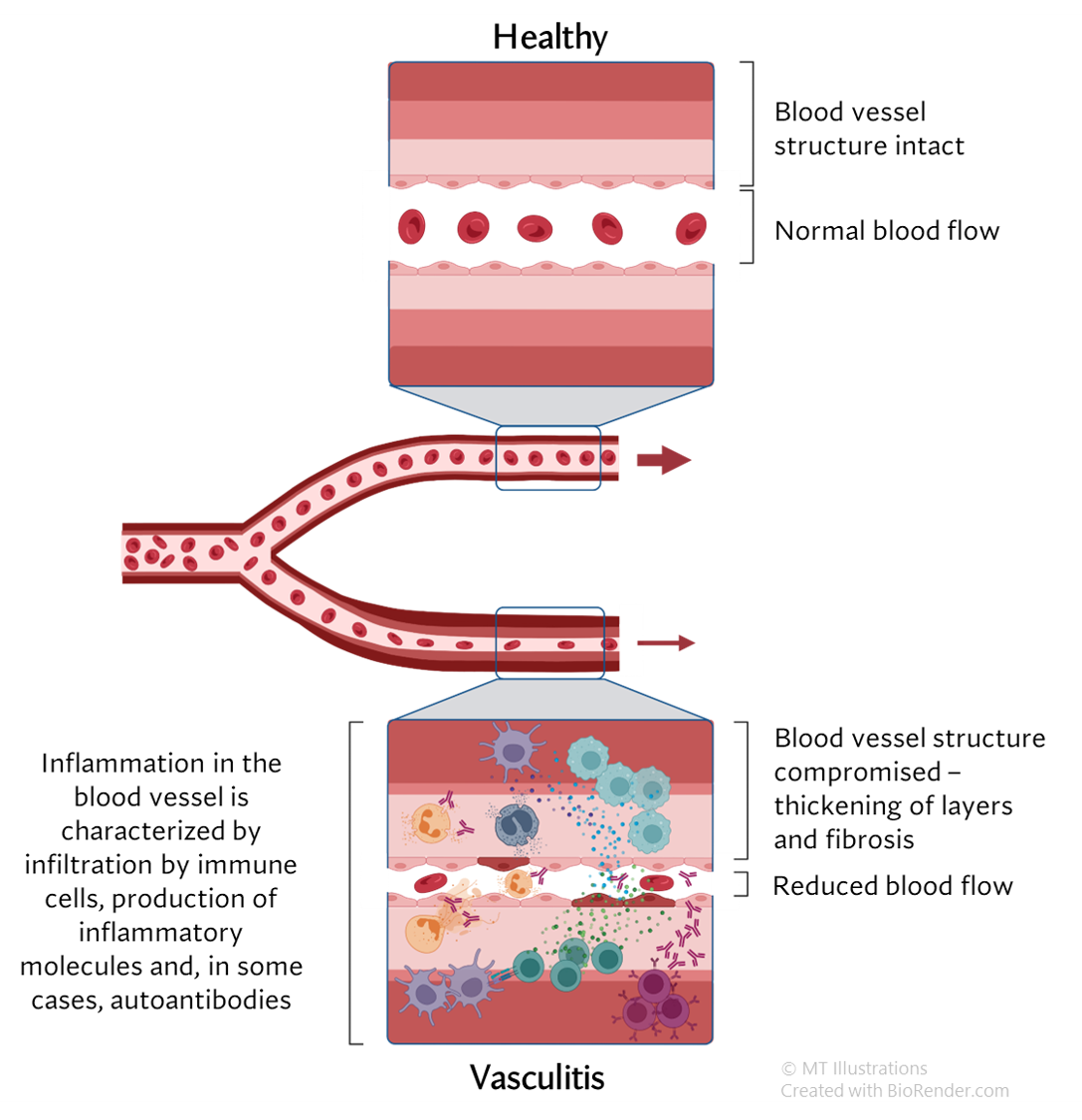
While we may not know the specific causes of the vasculitidies, we do have a basic understanding of the way that the immune system causes organ damage in these conditions. In all forms of vasculitis, activation of the immune system leads to the deposition of inflammatory cells and proteins in the walls of blood vessels. As this inflammation in blood vessels continues, the vessels become damaged and no longer serve their normal function of delivering blood to the organs that they supply. Consequently, the tissues downstream of these inflamed vessels are starved of oxygen and nutrients needed for normal function. At a basic level, this is a process similar to what occurs in a heart attack or a stroke – but instead of the cholesterol plaque that blocks a coronary artery in a heart attack, the immune system is responsible for blockage of blood vessels in vasculitis.

All information contained within the Johns Hopkins Vasculitis Center website is intended for educational purposes only. Visitors are encouraged to consult other sources and confirm the information contained within this site. Consumers should never disregard medical advice or delay in seeking it because of something they may have read on this website.
Mepolizumab (Nucala®)

What is mepolizumab?

Mepolizumab is a monoclonal antibody approved for the treatment of eosinophilic granulomatosis with polyangiitis (EGPA).

How does mepolizumab work?

Mepolizumab blocks IL-5 – a molecule involved in the maturation and activation of eosinophils.

Eosinophils are a type of white blood cell associated with allergic reactions. Eosinophils are implicated in the inflammation present in EGPA, and are often found in the tissues affected by this form of vasculitis.

By blocking IL-5, mepolizumab inhibits the accumulation of eosinophils in the tissues affected by EGPA.

How is mepolizumab given?

Mepolizumab is given as a self-injection at a dose of 300 mg every 4 weeks for EGPA.

Side effects:

Eosinophils do not play as important a role in the normal immune response to typical infections as do other white blood cells, such as neutrophils or lymphocytes. Consequently, mepolizumab is not associated with the same sorts of infections that are the major risk encountered with other immunosuppressant medications.

All immunosuppressants require regular monitoring in the form of blood tests, in-person assessments, and vigilance for signs of infection.

Prednisone

Prednisone is a corticosteroid with potent anti-inflammatory effects. Corticosteroids are a cornerstone of treating most types of vasculitis, and are often used in combination with other immunosuppressive medications. Prednisone works very quickly, and is therefore used (often at high doses) at the time of initial diagnosis to bring vasculitis under control. Then, prednisone is gradually reduced (“tapered”) while another immunosuppressive drug is started for long term treatment. Over time, the “steroid-sparing” immunosuppressive drug is used to control vasculitis, and prednisone is eventually stopped.

Side Effects

Corticosteroids cause a long list of side effects, making it dangerous to use these drugs at significant doses for long term treatment. The side effects of prednisone are related to: 1) the amount of steroid a patient takes in his/her daily dose, and 2) the length of time the patient remains on the medication. We emphasize that not all side effects occur in all patients.

Despite the numerous potential side effects of corticosteroids listed below, their introduction into patient care more than 50 years ago revolutionized the treatment of many diseases, including vasculitis. When used properly, these drugs save lives and avert threats to the function of important organs.

Common Side Effects of Steroids:

  • Increased Susceptibility to Infections
  • Weight Gain
  • Glucose Intolerance
  • Hypertension
  • Bone Thinning
  • Avascular Necrosis of bone
  • Easy Bruising
  • Abdominal Striae
  • Hirsutism
  • Acne
  • Mood Swings/Insomnia
  • Cataracts

Increased Susceptibility to Infections

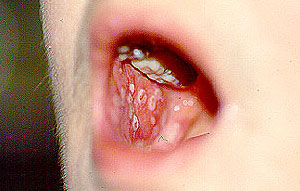
Patients are at increased risk for many types of infections, from minor fungal infections in the mouth (“thrush”, caused by Candida) to life–threatening infections such as Pneumocystis carinii pneumonia. The higher the steroid dose and the longer the duration of therapy, the greater the risk of infection. The risk is also increased when patients receive combinations of immunosuppressive medications, such as cyclophosphamide (cytoxan) and prednisone. The risk of some infections can be greatly reduced by taking specific types of antibiotics prophylactically (such as Bactrim).

Pictured below is woman under treatment with prednisone and methotrexate for vasculitis and a concurrent neurologic condition (myasthenia gravis) developed painful vesicles in her mouth. The vesicles were confirmed by culture to be caused by reactivation of a Herpes simplex infection, and responded to treatment with acyclovir.

Weight Gain

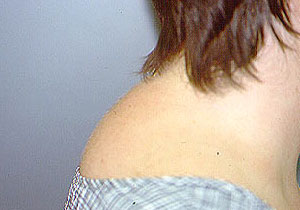
Weight gain is usually the most dreaded side–effects of steroids, incurred to some degree by nearly all patients who take them. The amount of weight gain varies from individual to individual. In addition to causing weight gain, prednisone leads to a redistribution of body fat to places that are undesirable, particularly the face, back of the neck, and abdomen. Pictured below is an example of redistribution of body fat to the back of the neck. Accumulation of fat in this area is sometimes referred to as a “buffalo hump”.

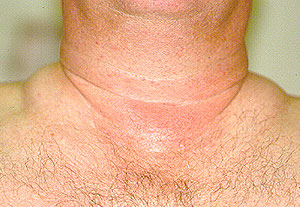
Another example of this “redistribution” is pictured below. Supraclavical “fat pads” are collections of fat at the base of the neck, just above the collarbones, which are common in patients on steroids. They sometimes cause concern among patients if mistaken for lymph nodes or other causes for worry, but will gradually subside as the prednisone dose is tapered to below 10 milligrams/day.

In addition to this redistribution of fat, many patients undergo loss of muscle strength (muscle atrophy) while taking steroids. Regular physical exercise is key to avoiding this type of deconditioning that often occurs with prednisone treatment.

Glucose Intolerance

High blood sugar, or steroid–induced diabetes. Patients who are “pre-diabetic” can develop diabetes and the need for insulin while taking steroids. This usually resolves when the steroids are decreased or discontinued, but can be worsened by weight gain.

Hypertension

High blood pressure. This usually improves as the corticosteroid dose is reduced.

Bone Thinning (Osteoporosis)

Prednisone may cause thinning of the bones even in people who are not usually at high risk for osteoporosis (for example: males, young people). In people susceptible to osteoporosis, prednisone may accelerate the process of bone loss. Fortunately, in the past few years, excellent treatments and preventive measures have become available for osteoporosis. All patients on prednisone for prolonged periods are candidates for these medicines. Patients should be aware of their daily intake of calcium and Vitamin D while on steroids. Bone density measurement is commonly done using DEXA scans.

Avascular Necrosis of Bone

For reasons that are not known, high dose prednisone (for example, greater than 20 milligrams a day) predisposes some patients to joint damage, most often of the hips. In avascular necrosis (or osteonecrosis, meaning “bone death”) of the hip, the part of the leg bone that inserts into the pelvis dies, resulting in pain with weight–bearing and some loss of joint function. Many patients with avascular necrosis require joint replacements.

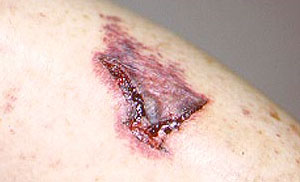
Easy Bruising

Prednisone also causes “thin skin”. Patients on moderate to high doses of prednisone often notice that they bruise easily, even with only slight trauma. Pictured below is a patient with giant cell arteritis who suffered a skin laceration after she struck her leg against a chair.

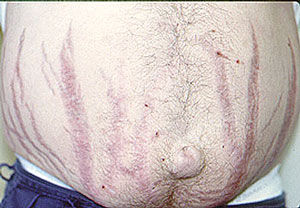
Abdominal Striae

Abdominal striae (“stripes”), as pictured below, frequently occur in patients who take high doses of steroids for long periods of time.

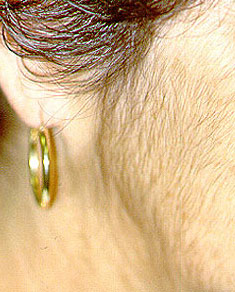
Hirsutism

Hirsutism is excessive growth of body hair. Patients vary in the degree to which this side effect of steroids occurs. Although some patients experience minimal hirsutism, the patient depicted below developed this side effect after taking 10 milligrams of prednisone for a few months.

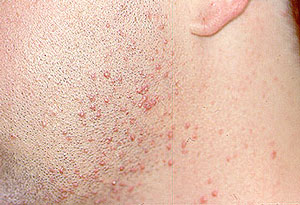
Acne

High dose prednisone predisposes some patients to acne, especially facial acne, as pictured below. The facial acne developed after several weeks of high steroid doses.

Mood Swings/Insomnia

Many patients find it difficult to fall asleep when taking high doses of steroids. Many also find that they are more irritable or anxious than usual. Steroids sometimes even induce depression or psychosis, which usually improves when the drug is decreased or discontinued.

Cataracts

Long–term steroid use may lead to cataract development in the eyes, which frequently require surgical removal.

What is Vasculitis?

What is Vasculitis?

The term “vasculitis” refers to a condition characterized by inflammation focused in the wall of blood vessels.

This inflammation causes damage to the vessels, and subsequently, injury to the organs that the blood vessels supply.

Below you will find links to additional information regarding the diagnosis of vasculitis.

  • Symptoms of Vasculitis – Information on the clinical manifestations of vasculitis.
  • Diagnosing Vasculitis – Explanations of the various tests used to diagnose vasculitis.
  • Causes of Vasculitis – Discussion of the possible causes of vasculitis.
  • Types of Vasculitis – Information on the types of Vasculitis
  • Glossary of Terms – Medical terminology used throughout this website.
  • « Go to Previous Page
  • Go to page 1
  • Interim pages omitted …
  • Go to page 3
  • Go to page 4
  • Go to page 5

Primary Sidebar


donate to the Johns Hopkins Vasculitis Center

All information contained within the Johns Hopkins Vasculitis Center website is intended for educational purposes only. Visitors are encouraged to consult other sources and confirm the information contained within this site. Consumers should never disregard medical advice or delay in seeking it because of something they may have read on this website.
Footer

Johns Hopkins Rheumatology

  • Johns Hopkins Rheumatology
  • Johns Hopkins Arthritis Center
  • Johns Hopkins Lupus Center
  • Johns Hopkins Lyme Disease Research Center
  • Johns Hopkins Myositis Center
  • Johns Hopkins Scleroderma Center
  • Johns Hopkins Sjögren’s Syndrome Center

Connect With Us

  • Facebook
  • Twitter
  • YouTube
U.S. News and World Report Rankings Badge

Johns Hopkins Medicine Johns Hopkins Medicine logo
Language Assistance Available:
  • Español
  • American Sign Language
  • עִברִי
  • אידיש
  • አማርኛ
  • 繁體中文
  • Français
  • Tagalog
  • Русский
  • Português
  • Italiano
  • Tiếng Việt
  • Ɓàsɔ́ɔ̀-wùɖù-po-nyɔ̀
  • Igbo asusu
  • èdè Yorùbá
  • বাংলা
  • 日本語
  • 한국어
  • Kreyòl Ayisyen
  • العربية
  • Deutsch
  • Polski
  • Ελληνικά
  • ગુજરાતી
  • ภาษาไทย
  • اُردُو
  • فارسی
  • हिंदी
  • Deitsch
  • ខ្មែរ
  • မြန်မာ
Contact & Privacy Information
Price Transparency
Notice of Privacy Practices Privacy Statement
Terms & Conditions of Use Non-Discrimination Notice
Manage Cookie Preferences
Copyright © 2025 Johns Hopkins Rheumatology