• Skip to primary navigation
  • Skip to main content
  • Skip to primary sidebar
  • Skip to footer

Johns Hopkins Vasculitis Center

Show Search
Hide Search
  • About Our Center
    • Appointments and Directions
    • Meet Our Team
    • Support Our Center
  • What is Vasculitis?
    • Types of Vasculitis
    • Causes of Vasculitis
    • Symptoms of Vasculitis
    • Diagnosing Vasculitis
  • Vasculitis Treatments
    • Prednisone
    • Avacopan (Tavneos®)
    • Apremilast (Otezla®)
    • Azathioprine
    • Colchicine
    • Cyclophosphamide (Cytoxan)
    • Dapsone
    • Supplemental Immunoglobulin (IVIG/SCIG)
    • Leflunomide
    • Mepolizumab (Nucala®)
    • Methotrexate (MTX)
    • Mycophenolate
    • Rituximab
    • Sarilumab (Kevzara®)
    • TNF Inhibitors
    • Tocilizumab (Actemra®)
  • Vasculitis Research
  • Resources
Home / Search for "search.html/whatis/diagnosis.html/treatments/prednisone.html"

Search Results for: search.html/whatis/diagnosis.html/treatments/prednisone.html

Johns Hopkins Vasculitis Center

Johns Hopkins

“Vasculitis” is a general term for a group of diseases that involve inflammation in blood vessels. Blood vessels of all sizes may be affected, from the largest vessel in the body (the aorta) to the smallest blood vessels in the skin (capillaries). The size of blood vessel affected varies according to the specific type of vasculitis. There are numerous forms of vasculitis, and most are relatively rare diagnoses.

The Johns Hopkins Vasculitis Center is committed not only to the care of patients with these diseases, but to patient education as well. Most patients who meet us in clinic were not familiar with the disease “vasculitis” prior to their own diagnosis, and are faced with learning an enormous amount of new information as they begin their journey into treatment. This website is intended primarily for patients, to provide information about the diagnosis and treatment of vasculitis, and to inform readers about the Johns Hopkins Vasculitis Center.

We hope you will find this site informative, and we welcome your feedback!

Appointments and Directions

For New Patients

In order for your care to be matched to an appointment with an expert in the field of your diagnosis, it is necessary to have your records available to our physician reviewers prior to scheduling an appointment. Therefore, we ask that you have your referral and medical records faxed to 410-367-2371 or emailed to PASOnBaseRheuma@jhmi.edu. It is important to include the following: a referral from your current physician, any clinical notes, imaging reports (including x-rays and MRIs), lab results, other tests results as applicable (such as pulmonary function tests echocardiograms, pathology reports, EMG/NCS results).

Once the review process has been completed, you will be contacted by one of our intake coordinators to assist with scheduling your appointment. You may also call the scheduling office at 443-997-1552 at any time to inquire as to the status of your record review.

For International patients, please contact Johns Hopkins International for initial and return patient appointments.

Unfortunately, our physicians cannot speak with or give medical advice to patients that are not currently under our care.

On the day of your scheduled appointment, it is important to:

  • Arrive at least 30 minutes before your appointment to allow time for registration
  • Bring your insurance card
  • Bring a photo I.D.
  • Bring your co-payment
  • Bring a copy of name and address of all persons/doctors who would like to get copies of your visit materials
  • Bring the following medical records if not already sent:
    • All medical records relevant to your diagnosis (including rheumatology records, discharge summaries)
    • List of all current medications (include all over-the-counter medications)
    • Recent laboratory results
    • Any imaging results (i.e., x-rays, ultrasounds, etc.)
    • Pulmonary function tests (bring all test results)
    • Echocardiogram (bring all test results)

High resolution CT scan of lung (bring written report and copy of actual scan on CD-ROM disc)

Please forward the results of previous medical evaluations. In particular, the following information is required:

  • Referral letter from your physician
  • Summary letter from your doctor and/or hospital discharge summaries
  • Recent laboratory results
  • Biopsy slides or reports
  • Results of radiology studies

This “information gathering” is an important component of your visit. It allows the Vasculitis Center’s physicians to examine and review relevant information before your scheduled visit. This preparation greatly speeds the development of an effective plan for medical care. If time permits, we will send you a questionnaire to fill out before your appointment.

International Patients

For International patients, please contact Johns Hopkins International for initial and return appointments.

For Returning Patients

You will need to plan for a one day visit to the Center as a return patient.

  • Return appointments for the Vasculitis Center can be made by calling 443-997-1552.
  • Please arrive 15 minutes before your appointment.
  • You may also be asked to complete some additional forms to allow us to bill your insurance, to review your health, and let us know how you have been doing since your last visit.
  • Bring a copy of your insurance cards.

Late, Canceled and No Show Appointments

Late: The appointment time scheduled for you is time specifically allotted for your visit. If you are running late for an appointment, please call our scheduling office. Please note if you are more than 15 minutes late for your scheduled appointment time, we may not be able to accommodate your visit.

Canceled / No Show: If you are unable to keep your appointment we require a minimum of 24 hours’ notice. If you repeatedly do not provide our office with 24 hours’ notice, you may be subject to be discharged from our practice.

Rescheduling Appointments

Our clinic is very busy and unfortunately patients often have to wait several months for an appointment. If you need to reschedule your appointment, please call us at 443-997-1552 as soon as possible. This will allow us to schedule another patient who is waiting to be seen.

Office Hours

Our normal clinic hours are Monday – Friday 7:30am-5:00pm. Our normal phone hours are Monday – Friday 9:00 AM -4:00 PM.

Our Office is closed for the following Holidays:

  • New Year’s Eve
  • New Year’s Day
  • Martin Luther King, Jr. Day
  • Memorial Day
  • Independence Day (July 4th when it falls on a regular business day, the Friday before when it falls on Saturday, or the Monday after when it falls on Sunday)
  • Labor Day
  • Thanksgiving Day
  • Day after Thanksgiving
  • Christmas Eve
  • Christmas Day (December 25th when it falls on a regular business day, the Friday before when it falls on Saturday, or the Monday after when it falls on Sunday)

There may be other posted days that are closed due to divisional activities and/or professional development. That information will be provided on all divisional voicemails.

After-Hours, Weekends and Holidays Calls

  • If you are experiencing a medical emergency after-hours, please call 911 or go to your nearest urgent care facility or emergency department.
  • If your need is a medical management question that cannot wait until our next business day, we offer an On-Call Provider to help you. Our On-Call Provider may be paged by calling our answering service at 410-955-6070.

Inclement Weather and Unexpected Closings

  • It is the policy of Johns Hopkins Medicine to reasonably maintain outpatient clinical operations; however, due to weather or other unexpected closings, such as an area-wide power outage or water main break, there may be times when it is necessary to close our office.
  • Our closing notices will be provided for you via our voicemail recording and our staff will contact you if we are not able to keep your appointment, let you know what we are experiencing, and when we may be looking to reschedule your visit.

Insurance / Billing Information

We are participating with the following insurance payors:

  • Aetna Health Plan
  • Beech Street PPO
  • Blue Cross Blue Shield
  • CareFirst BlueChoice HMO
  • CIGNA
  • Coventry Healthcare
  • EHP
  • First Health
  • Great West/One Health PPO
  • Humana Choicecare
  • InforMed/CHP
  • Kaiser
  • MDIPA HMO
  • Maryland Medical Assistance
  • Medicare Part B*
  • Multiplan PPO
  • NCAS
  • One Net PPO
  • Optimum Choice HMO
  • Priority Partners MCO
  • Private Healthcare Systems (PHCS)
  • Tricare Reserve Select
  • Tricare Standard
  • US Family Health Plan

*We do not participate with out-of-state Medicaid or Medicare Advantage/Replacement plans.

Copayments:

It is a good idea to check with your insurance to make sure you are covered for your visit and services with us. Please be prepared to pay your copay and any balance due at the time of your visit. We accept VISA, MASTERCARD, DISCOVER, AMERICAN EXPRESS, and E-CHECKS.

Non participating insurance/self-pay:

We realize that insurance may not always cover care at Johns Hopkins. With the exception of Medicare Advantage and Medicaid plans, patients may have the ability to pay out-of-pocket for non-covered services. Patients scheduled for new patient appointments are required to pay a $600 deposit at the time of service. Patients scheduled for return visits are required to pay a $289 deposit at the time of service.

Prescription Policies and Prescription Refills

In order for our office to provide you with timely refills, please request your medication refills at least one week in advance. Refill requests may be made via a myChart message to your provider, calling our office, or by receiving a fax from your pharmacy.

Forms Completion

The only documentation regarding your health or illness required by law (and included in the office visit charge) is an office visit note. Completing paperwork for schools, camps, Family Medical Leave Act (FMLA) claims, long-term care, life insurance, the Department of Veterans’ Affairs, and other disability claims go beyond routine medical care and may require an update of your medical information or a special examination. In order to make this determination, please forward your form(s) to our office prior to your scheduled visit. For those forms that can be completed outside of a clinical visit, please allow a minimum of 5 business days for your completed form to be returned to you.

Directions to The Johns Hopkins Vasculitis Center

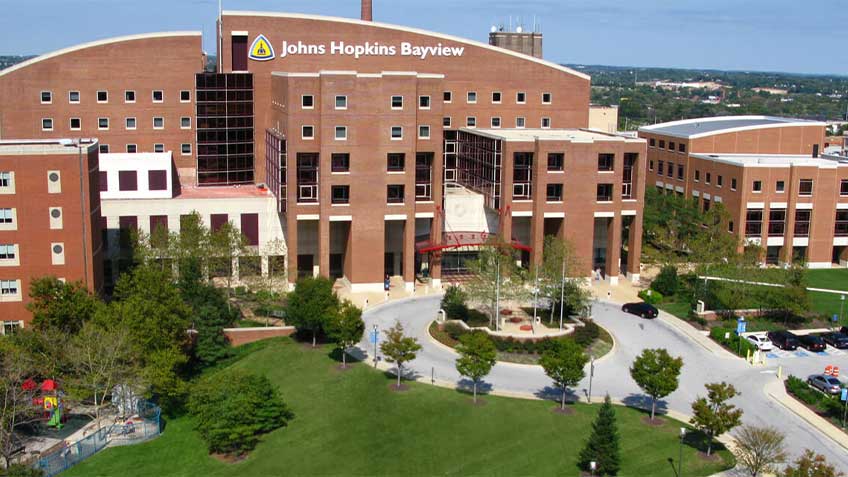
Please view the following link to see the driving directions and maps to The Johns Hopkins Vasculits Center and Bayview Medical Center. Once on the campus of the Johns Hopkins Bayview Medical Center, please park in the mid-campus parking lot, indicated on the campus map. The mid-campus parking lot is directly across the street from the Johns Hopkins Asthma and Allergy Center, which houses the Johns Hopkins Vasculitis Center. We are located in Room 1B.1.

Directions to the Center

Colchicine

What is colchicine?

Colchicine is an oral drug used in the treatment of some forms of cutaneous vasculitis. It is a very old medicine that is more frequently encountered in the treatment of gout.

How does colchicine work?

Colchicine seems to work by preventing immune cells from becoming fully activated.

How is colchicine given?

Colchicine is given as an oral pill at a dose of 0.6 mg either once or twice per day.

Side effects:

In contrast to most other vasculitis treatments, colchicine is not an immunosuppressant drug and does not cause any significant risk of infection.

Colchicine can cause gastrointestinal side effects and requires monitoring during its use. Some patients with kidney disease may not be able to safely take colchicine on a long-term basis.

Copyright Information

All information contained within this web site is Copyright © 2012 by The Johns Hopkins University School of Medicine and the Johns Hopkins Vasculitis Center.

All rights are reserved. Requests for use of content contained within this site can be emailed, replies can take a minimum of one business week for reply.

Requests for permission to reprint, reproduce, and distribute documents and related graphics that appear on this website/are hosted on this server may be submitted by fax (410)-550-2072 or e-mail to Wes Linda.

The names of the Johns Hopkins University, the Johns Hopkins University Rheumatology Division, the Johns Hopkins Vasculitis WebSite or its faculty or staff may not be used in publicity or advertising without permission. Exceptions to this include listings on web indexes, search engines, and related systems.

The Johns Hopkins University, The Johns Hopkins University School of Medicine and/or its Division of Rheumatology and faculty and staff of the Johns Hopkins University cannot be held responsible or liable for errors or inaccuracies in transcriptions, translations, or any other type of reproduction, alteration or adulteration of material presented on any page of this web site.

Causes of Vasculitis

There are many different types of vasculitis, some with different causes than others.

Certain forms of vasculitis that can be due to infection where the microbe directly invades the vessel wall. Syphilis is one example of vasculitis that can be caused by infection in the blood vessel. Treating the infection is the main goal in managing this sort of vasculitis, which is not an autoimmune disease, but rather an infection.

Other infections can provoke the immune system into causing damage in blood vessels. Here, the infection is the trigger, but the immune system is the cause of the vascular damage. Viral hepatitis (B and C) are examples of this sort: some patients with Hepatitis B may develop polyarteritis nodosa, while some patients with Hepatitis C may develop cryoglobulinemic vasculitis.

Other types of vasculitis may be due to an ‘allergic‘-type reaction to medications. For example, certain blood pressure medications (hydralazine) or thyroid medications (propylthiouracil) can trigger ANCA associated vasculitis in some patients. Cocaine is an illicit drug that is linked to vasculitis and vascular damage.

However, the causes of most vasculitides are currently unknown. While we can identify some risk factors (such as older age in giant cell arteritis), we do not know the specific causes of these diseases. These forms of vasculitis of unknown cause are considered autoimmune diseases.

Under normal circumstances, our immune system serves to defend us from infection and other threats, such as cancers. In autoimmune diseases, the immune system generates a response not against a foreign threat, but against normal “self” tissues. This abnormal immune response against “self” tissues can result in a wide array of autoimmune diseases, including relatively common diseases (such as psoriasis or thyroid disease) as well as rare conditions (such as vasculitis).

In most cases, autoimmune diseases are believed to be due to an abnormal immune response that is generated in a susceptible person, and eventually leads to a cycle of ongoing inflammation in otherwise normal tissues where no infection or other identifiable threat is present. Some interaction between the immune system and the environment is thought necessary for this to occur, and a person’s genetic background likely places some individuals at higher risk than others.

A better understanding of the specific causes of these diseases would lead to improved means of diagnosing, treating, and even preventing these conditions. Uncovering the causes of vasculitis is a major goal of vasculitis research.

While we may not know the specific causes of the vasculitidies, we do have a basic understanding of the way that the immune system causes organ damage in these conditions. In all forms of vasculitis, activation of the immune system leads to the deposition of inflammatory cells and proteins in the walls of blood vessels. As this inflammation in blood vessels continues, the vessels become damaged and no longer serve their normal function of delivering blood to the organs that they supply. Consequently, the tissues downstream of these inflamed vessels are starved of oxygen and nutrients needed for normal function. At a basic level, this is a process similar to what occurs in a heart attack or a stroke – but instead of the cholesterol plaque that blocks a coronary artery in a heart attack, the immune system is responsible for blockage of blood vessels in vasculitis.

All information contained within the Johns Hopkins Vasculitis Center website is intended for educational purposes only. Visitors are encouraged to consult other sources and confirm the information contained within this site. Consumers should never disregard medical advice or delay in seeking it because of something they may have read on this website.

Avacopan (Tavneos®)

What is avacopan?

Avacopan is an oral drug used to treat ANCA associated vasculitis. Avacopan was FDA approved in 2021, and we are still learning how best to use it.

How does avacopan work?

Avacopan is thought to work by blocking the activation and movement of neutrophils – a type of white blood cell involved in ANCA associated vasculitis. It was designed to block a specific part of the immune system called C5a (complement component 5a).

How is avacopan given?

Avacopan is currently used to help reduce the amount of prednisone given during the treatment of active ANCA associated vasculitis. Avacopan is taken by mouth at a dose of 30 mg twice per day.

Side effects:

We pay particular attention to liver function tests during avacopan therapy.

All immunosuppressants require regular monitoring in the form of blood tests, in-person assessments, and prompt attention to any signs or symptoms of infection.

  • « Go to Previous Page
  • Go to page 1
  • Interim pages omitted …
  • Go to page 3
  • Go to page 4
  • Go to page 5
  • Go to page 6
  • Go to Next Page »

Primary Sidebar


donate to the Johns Hopkins Vasculitis Center

All information contained within the Johns Hopkins Vasculitis Center website is intended for educational purposes only. Visitors are encouraged to consult other sources and confirm the information contained within this site. Consumers should never disregard medical advice or delay in seeking it because of something they may have read on this website.

Footer

Johns Hopkins Rheumatology

  • Johns Hopkins Rheumatology
  • Johns Hopkins Arthritis Center
  • Johns Hopkins Lupus Center
  • Johns Hopkins Lyme Disease Research Center
  • Johns Hopkins Myositis Center
  • Johns Hopkins Scleroderma Center
  • Johns Hopkins Sjögren’s Syndrome Center

Connect With Us

  • Facebook
  • Twitter
  • YouTube
U.S. News and World Report Rankings Badge

Johns Hopkins Medicine Johns Hopkins Medicine logo
Language Assistance Available:
  • Español
  • American Sign Language
  • עִברִי
  • אידיש
  • አማርኛ
  • 繁體中文
  • Français
  • Tagalog
  • Русский
  • Português
  • Italiano
  • Tiếng Việt
  • Ɓàsɔ́ɔ̀-wùɖù-po-nyɔ̀
  • Igbo asusu
  • èdè Yorùbá
  • বাংলা
  • 日本語
  • 한국어
  • Kreyòl Ayisyen
  • العربية
  • Deutsch
  • Polski
  • Ελληνικά
  • ગુજરાતી
  • ภาษาไทย
  • اُردُو
  • فارسی
  • हिंदी
  • Deitsch
  • ខ្មែរ
  • မြန်မာ
Contact & Privacy Information
Price Transparency
Notice of Privacy Practices Privacy Statement
Terms & Conditions of Use Non-Discrimination Notice
Manage Cookie Preferences
Copyright © 2025 Johns Hopkins Rheumatology