• Skip to primary navigation
  • Skip to main content
  • Skip to primary sidebar
  • Skip to footer

Johns Hopkins Vasculitis Center

Show Search
Hide Search
  • About Our Center
    • Appointments and Directions
    • Meet Our Team
    • Support Our Center
  • What is Vasculitis?
    • Types of Vasculitis
    • Causes of Vasculitis
    • Symptoms of Vasculitis
    • Diagnosing Vasculitis
  • Vasculitis Treatments
    • Prednisone
    • Avacopan (Tavneos®)
    • Apremilast (Otezla®)
    • Azathioprine
    • Colchicine
    • Cyclophosphamide (Cytoxan)
    • Dapsone
    • Supplemental Immunoglobulin (IVIG/SCIG)
    • Leflunomide
    • Mepolizumab (Nucala®)
    • Methotrexate (MTX)
    • Mycophenolate
    • Rituximab
    • Sarilumab (Kevzara®)
    • TNF Inhibitors
    • Tocilizumab (Actemra®)
  • Vasculitis Research
  • Resources
Home / Search for "search.html/whatis/diagnosis.html/page/polyarteritis.html"

Search Results for: search.html/whatis/diagnosis.html/page/polyarteritis.html

Takayasu’s Arteritis

  • First Description
  • Who gets Takayasu’s Arteritis (the “typical” patients)?
  • Classic symptoms of Takayasu’s Arteritis
  • What causes Takayasu’s Arteritis?
  • How is Takayasu’s Arteritis diagnosed?
  • Treatment and Course of Takayasu’s Arteritis
  • What’s new in Takayasu’s Arteritis?
  • In medical terms, by David Hellmann, M.D.

First Description

The first case of Takayasu’s arteritis was described in 1908 by Dr. Mikito Takayasu at the Annual Meeting of the Japan Ophthalmology Society. Dr. Takayasu described a peculiar “wreathlike” appearance of blood vessels in the back of the eye (retina). Two Japanese colleagues at the same meeting reported similar eye findings in patients whose wrist pulses were absent. It is now known that the blood vessel malformations that occur in the retina are a response (new blood vessel growth) to arterial narrowings in the neck, and that the absence of pulses noted in some patients occur because of narrowings of blood vessels to the arms. The eye findings described by Dr. Takayasu are rarely seen in patients from North America.

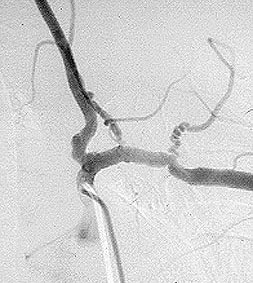
Pictured below is a close–up view of an angiogram of the left vertebral and subclavian arteries in a patient with Takayasu’s arteritis. Note the narrowing and irregularities that occur at several sites, and the “corkscrew” configuration of one vessel segment near the junction of the two arteries. These changes, caused by inflammation in the blood vessel wall, sometimes cause complete blockage of the artery.
Takayasu’s arteritis is occasionally called “pulseless disease”, because of the difficulty in detecting peripheral pulses that sometimes occurs as a result of the vascular narrowings.

Who gets Takayasu’s Arteritis?

The “typical” patient with Takayasu’s arteritis is a woman under the age of 40. There is a 9:1 female predominance in this disease. Although the disease has a worldwide distribution, it appears to occur more often in Asian women.

Takayasu’s arteritis is a rare disease. The best estimates of the disease frequency suggest that 2 or 3 cases occur each year per million people in a population.

Classic Symptoms of Takayasu’s Arteritis

Takayasu’s arteritis is a chronic inflammatory condition that affects the largest blood vessel in the body (the aorta) and its branches. Thus, the complications of Takayasu’s arise directly or indirectly from damage to these blood vessels. The vasculitides are classified according to the size of blood vessel involved. Takayasu’s is the classic “large vessel” vasculitis.

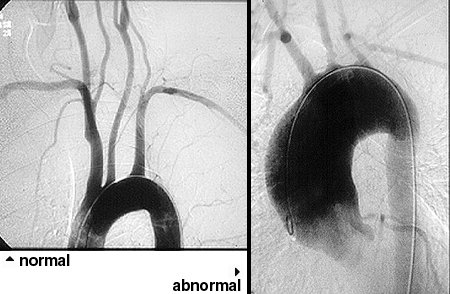
Pictured below is a normal aortic arch on the left, with narrow, smooth blood vessels. On the right is an example of an abnormal aortic arch in a patient with Takayasu’s, with obvious dilation of the ascending aorta on the left side of the picture.
Clinicians divide Takayasu’s arteritis into two phases: 1) a systemic phase; and 2) an occlusive phase. Although these two phases are not always distinct (i.e., patients may have features of both phases at the same time), this division is a useful way of thinking about the disease.

In the systemic phase, patients have symptoms and signs of an active inflammatory illness. These may include “constitutional symptoms” (fever, fatigue, weight loss), arthritis, and non-specific aches and pains. There may be tenderness overlying affected arteries. Most patients have elevations of the erythrocyte sedimentation rate during the systemic phase.

The systemic phase is succeeded by the occlusive phase, during which patients begin to develop symptoms caused by the narrowing of affected arteries. These may include pain in the limbs that occurs during repetitive activities (“claudication”), such as pain in the arm that occurs while using a handsaw or pain in the calves brought on by walking. The symptoms also include dizziness upon standing up, headaches, and visual problems. During the occlusive phase, affected blood vessels may be narrowed to such an extent that the normal arterial pulsations (“pulses”) in the neck, elbow, wrist, or lower extremities cannot be felt. Using a stethoscope, one may also hear “bruits” (pronounced ‘brew eez’), a harsh, “whooshing” sounds made by the flow of blood through abnormally narrowed vessels. High blood pressure is common, but blood pressures taken in the arms may be read as falsely low if there is a narrowing of an artery high up in the arm. With some patients, it is not possible to get accurate blood pressure readings in the arms. Using an ophthalmoscope, a physician may observe characteristic malformations of blood vessels that occur in advanced cases of Takayasu’s arteritis.

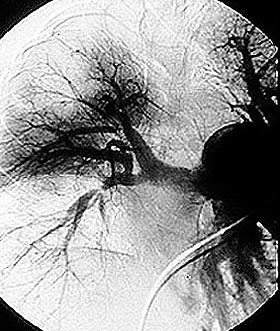
Although the lung involvement in Takayasu’s is frequently overshadowed by involvement of systemic large blood vessels, the pulmonary arteries may also be affected in this disorder. Pictured below is a pulmonary angiogram demonstrating beading and cut–off lesions of the right pulmonary arteries, and a large aneurysm of the left pulmonary artery.
What Causes Takayasu’s Arteritis?

The cause of Takayasu’s arteritis is not known. Some evidence suggests that an infection of some kind — viral, bacterial, or other — occurring in a person with other predisposing factors (such as the correct genes), may lead to this disease. This is an attractive hypothesis, but definitive evidence for it is lacking.

How is Takayasu’s Arteritis Diagnosed?

Making the diagnosis of Takayasu’s arteritis can be extremely difficult. Unfortunately it is very common for the disease to smoulder in the walls of large blood vessels for years, causing only non-specific symptoms associated with the systemic phase of the illness (or no symptoms), until a major complication results. These major complications may include dilation of the aorta with “stretching” of the aortic valve in the heart; critically reduced blood flow to an arm or leg; a stroke caused by high blood pressure in vessels of the brain, and many others.

Once the diagnosis is suspected, it is usually confirmed by a radiographic procedure such as an angiogram or a magnetic resonance imaging study demonstrating significant large artery disease consistent with Takayasu’s. In some cases in which blood vessel damage is so severe as to necessitate surgery to repair the aortic valve, the aorta, or some other large blood vessel, physicians are able to make unequivocal diagnoses by looking at tissue from the involved blood vessels under the microscope. Takayasu’s arteritis is pathologically indistinguishable from giant cell arteritis. In both, destruction of the blood vessel wall and giant cells are frequently present.

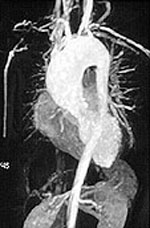
Pictured below is an example of large artery involvement in Takayasu’s arteritis. Magnetic resonance imaging study of the aorta and large blood vessels of the upper extremities, showing a large aneurysm of the ascending aorta, blockage of the right axillary artery (note the interruption of blood flow near the shoulder on the left of the figure), and many narrowings of the left subclavian artery (on the right of the figure).
Treatment and Course of Takayasu’s Arteritis

The great majority of patients with Takayasu’s arteritis respond to prednisone. The usual starting dose is approximately 1 milligram per kilogram of body weight per day (for most people, this is approximately 60 milligrams a day). Because of the significant side–effects of long-term high–dose prednisone use, the starting dose is tapered over several weeks to a dose that the physician feels is tolerable for the patient.

For long–term treatment in addition to prednisone (as “steroid sparing agents”), methotrexate, azathioprine, and even cyclophosphamide are sometimes used. There have been few studies of the use of these medications in this disease.

What’s New in Takayasu’s Arteritis?

One of the biggest problems confronting Takayasu’s patients and the physicians who care for them is determining how active the disease is. This can be an exceptionally challenging problem. The erythrocyte sedimentation rate (ESR) probably remains the most reliable marker of disease activity, but even this test is not helpful in a sizeable number of patients who have active arterial inflammation but normal ESRs. Because the treatments for Takayasu’s arteritis may be associated with substantial side–effects, we need more accurate means of gauging disease activity.

To this end, a study conducted by the International Network for the Study of Systemic Vasculitides (“INSSYS”) may be helpful. Investigators from INSSYS, which includes more than 300 physicians, scientists, and other experts in vasculitis from more than 50 different medical centers across the world, have been conducting a “Surrogate Markers Study” for the past several years. In this study, the investigators examine blood specimens from patients with vasculitis for the purpose of identifying proteins and other molecules whose presence indicates ongoing inflammation. Improved understanding of these diseases at a molecular level may permit more rational use of treatments in the future.

In medical terms, by David Hellmann, M.D.

A discussion of Takayasu’s Arteritis written in medical terms by David Hellmannn, M.D. (F.A.C.P.), The Johns Hopkins Vasculitis Center, for the Rheumatology Section of the Medical Knowledge Self-Assessment Program published and copyrighted by the American College of Physicians (Edition 11, 1998). The American College of Physicians has given us permission to make this information available to patients contacting our Website.

Takayasu’s arteritis is a granulomatous vasculitis chiefly of young women that involves the aorta and its major branches. Patients can present initially with obscure systemic symptoms such as fever of unknown origin or more commonly with symptoms and signs of large vessel vasculitis such as hypertension from renal artery stenosis, aortic regurgitation from aortitis, or stroke from carotid artery occlusion. Bruits and diminished or absent pulses are the most reliable signs. Anemia and elevated ESR accompany active disease. Diagnosis is confirmed by angiography showing stenosis and dilation of the aorta, its branches, or both. Thickening of the aortic wall detectable by MRI or ultrasonography can precede angiographic changes. Prednisone is effective for the systemic symptoms and can thwart progression of the vasculitis. Methotrexate may be an effective corticosteroid-sparing agent. Angioplasty alleviates renal artery stenosis about half the time. When needed, vascular bypass procedures and aortic valve replacement usually work well if deferred until the disease is inactive. Estimating disease activity is difficult but is based on systemic symptoms, anemia, ESR, progression of lesions, and pathology (when available).

Resources

Living with vasculitis can be challenging at times due to the complex nature of the disease and therapies. Also, vasculitis in the general population is quite rare, especially compared to other common medical conditions, such as diabetes and hypertension (high blood pressure). This can make patients with vasculitis feel misunderstood or alone. It can be very helpful for individuals with vasculitis to connect with other patients and their families.

If you have vasculitis, you are not alone. There is a strong community of patients and physicians to support you.

  • Vasculitis Foundation (USA) – www.vasculitisfoundation.org
  • Vasculitis UK – www.vasculitis.org.uk/
  • Vasculitis Foundation Canada – www.vasculitis.ca/
  • American Behcet’s Disease Association
  • Churg-Strauss Syndrome Association
  • Cryoglobulinemia Home Page
  • Arthritis Foundation
  • The American College of Rheumatology
  • European Vasculitis Study Group: EUVAS Homepage

Copyright Information

All information contained within this web site is Copyright © 2012 by The Johns Hopkins University School of Medicine and the Johns Hopkins Vasculitis Center.

All rights are reserved. Requests for use of content contained within this site can be emailed, replies can take a minimum of one business week for reply.

Requests for permission to reprint, reproduce, and distribute documents and related graphics that appear on this website/are hosted on this server may be submitted by fax (410)-550-2072 or e-mail to Wes Linda.

The names of the Johns Hopkins University, the Johns Hopkins University Rheumatology Division, the Johns Hopkins Vasculitis WebSite or its faculty or staff may not be used in publicity or advertising without permission. Exceptions to this include listings on web indexes, search engines, and related systems.

The Johns Hopkins University, The Johns Hopkins University School of Medicine and/or its Division of Rheumatology and faculty and staff of the Johns Hopkins University cannot be held responsible or liable for errors or inaccuracies in transcriptions, translations, or any other type of reproduction, alteration or adulteration of material presented on any page of this web site.

Causes of Vasculitis

There are many different types of vasculitis, some with different causes than others.

Certain forms of vasculitis that can be due to infection where the microbe directly invades the vessel wall. Syphilis is one example of vasculitis that can be caused by infection in the blood vessel. Treating the infection is the main goal in managing this sort of vasculitis, which is not an autoimmune disease, but rather an infection.

Other infections can provoke the immune system into causing damage in blood vessels. Here, the infection is the trigger, but the immune system is the cause of the vascular damage. Viral hepatitis (B and C) are examples of this sort: some patients with Hepatitis B may develop polyarteritis nodosa, while some patients with Hepatitis C may develop cryoglobulinemic vasculitis.

Other types of vasculitis may be due to an ‘allergic‘-type reaction to medications. For example, certain blood pressure medications (hydralazine) or thyroid medications (propylthiouracil) can trigger ANCA associated vasculitis in some patients. Cocaine is an illicit drug that is linked to vasculitis and vascular damage.

However, the causes of most vasculitides are currently unknown. While we can identify some risk factors (such as older age in giant cell arteritis), we do not know the specific causes of these diseases. These forms of vasculitis of unknown cause are considered autoimmune diseases.

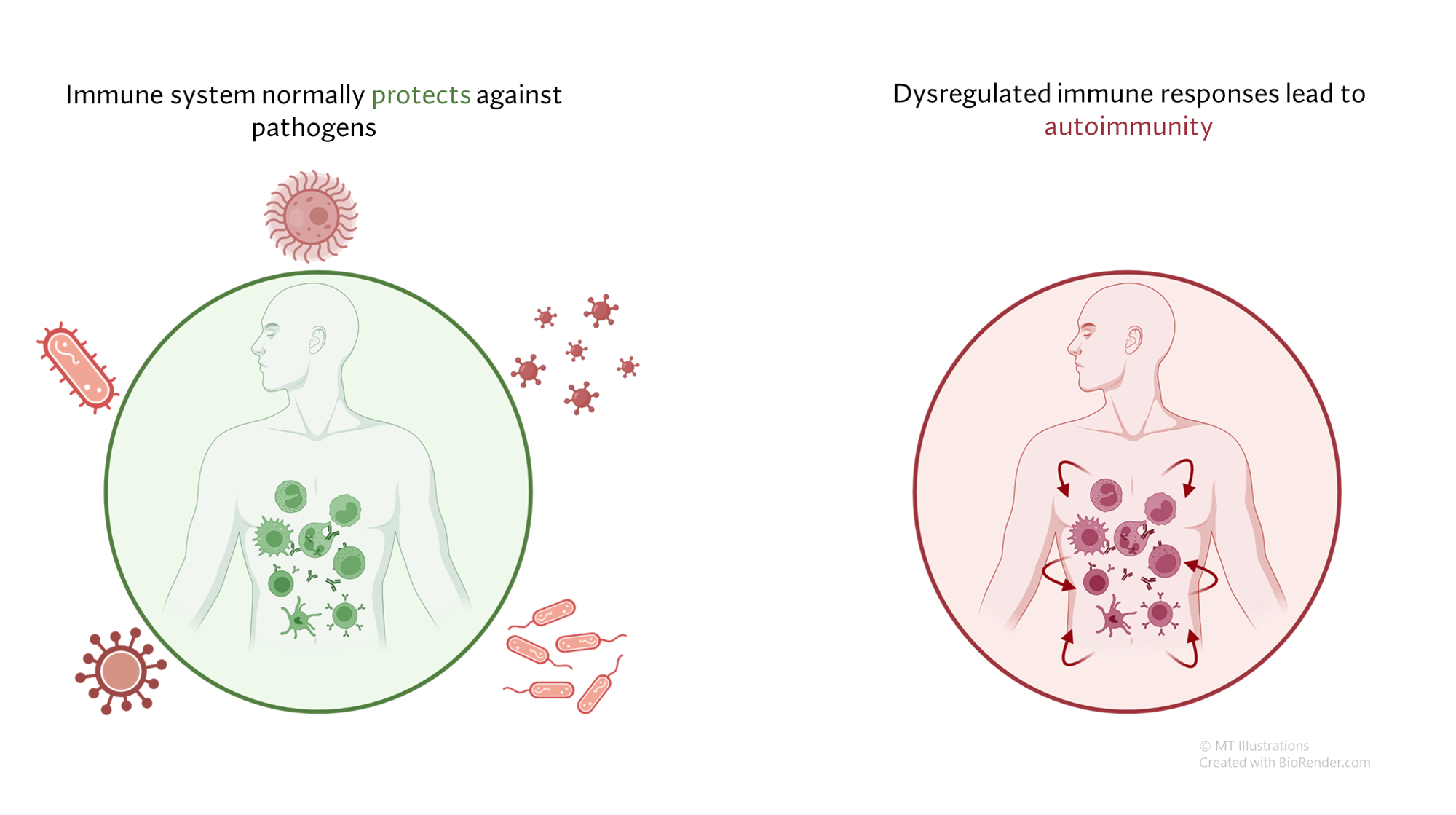
Under normal circumstances, our immune system serves to defend us from infection and other threats, such as cancers. In autoimmune diseases, the immune system generates a response not against a foreign threat, but against normal “self” tissues. This abnormal immune response against “self” tissues can result in a wide array of autoimmune diseases, including relatively common diseases (such as psoriasis or thyroid disease) as well as rare conditions (such as vasculitis).

In most cases, autoimmune diseases are believed to be due to an abnormal immune response that is generated in a susceptible person, and eventually leads to a cycle of ongoing inflammation in otherwise normal tissues where no infection or other identifiable threat is present. Some interaction between the immune system and the environment is thought necessary for this to occur, and a person’s genetic background likely places some individuals at higher risk than others.

A better understanding of the specific causes of these diseases would lead to improved means of diagnosing, treating, and even preventing these conditions. Uncovering the causes of vasculitis is a major goal of vasculitis research.

While we may not know the specific causes of the vasculitidies, we do have a basic understanding of the way that the immune system causes organ damage in these conditions. In all forms of vasculitis, activation of the immune system leads to the deposition of inflammatory cells and proteins in the walls of blood vessels. As this inflammation in blood vessels continues, the vessels become damaged and no longer serve their normal function of delivering blood to the organs that they supply. Consequently, the tissues downstream of these inflamed vessels are starved of oxygen and nutrients needed for normal function. At a basic level, this is a process similar to what occurs in a heart attack or a stroke – but instead of the cholesterol plaque that blocks a coronary artery in a heart attack, the immune system is responsible for blockage of blood vessels in vasculitis.

All information contained within the Johns Hopkins Vasculitis Center website is intended for educational purposes only. Visitors are encouraged to consult other sources and confirm the information contained within this site. Consumers should never disregard medical advice or delay in seeking it because of something they may have read on this website.

Glossary of Vasculitis Terms

A

Active disease: Disease state characterized by active, ongoing inflammation due to vasculitis. In this state, vasculitis causes damage to organs. Treatment is initiated to induce disease remission.

Alkylating agents: A group of drugs originally used to treat cancer, now used (in lower doses) to treat some forms of severe vasculitis.

ANCA: Anti-neutrophil cytoplasmic antibodies. The abbreviation is pronounced just like the last name of the singer, Paul Anka. These antibodies are found in patients with some forms of vasculitis, particularly granulomatosis with polyangiitis, microscopic polyangiitis, and the Churg-Strauss syndrome.

Anemia: A low hematocrit (roughly corresponding to a low red blood cell count).

Anesthesic: Means literally “without feeling”. A drug administered for medical or surgical purposes, that induces partial or total loss of sensation. An anesthesic may be topical, local, regional, or general, depending on the method of administration and area of the body affected.

Aneurysms: Weakening of a blood vessel wall by inflammation. Sometimes leads to rupture of the vessel.

Angiogram: An X-ray representation of blood vessels made after the injection of a radio-opaque dye. Used to visualize the inner layer of blood vessels and to determine the location and degree of narrowing or dilation.

Antibodies: A Y-shaped protein on the surface of B cells that is secreted into the blood in response to a challenge to the immune system, such as a bacterium, virus, parasite, or transplanted organ. Antibodies neutralize foreign proteins by binding specifically to them. Antibodies are also known as immunoglobulins.

Aphthous ulcers: Ulcerations on the mucous membranes of the mouth or genitals, often caused by an infection or trauma. Aphthous ulcers also occur in Behcet’s disease and connective tissue diseases such as Lupus.

Arthralgias: Aches or pains in joints, without obvious swelling, warmth, or redness.

Arthritis: Inflammation of a joint, usually accompanied by pain, swelling, and stiffness, and resulting from infection, trauma, degenerative changes, metabolic disturbances, or other causes. Arthritis occurs in various forms, such as the arthritis associated with infections, osteoarthritis, or rheumatoid arthritis. Many forms of vasculitis can also be associated with arthritis.

Aseptic: Using sterile techniques or methods to protect against infection by microbes.

Asymmetrical: Having no balance or symmetry. Different on the left side of the body as compared to the right. “Asymmetric weakness of the left lower extremity” means that the left leg is weak but the right is not.

Autoimmune: Relating to an immune response by the body against one of its own tissues; for example, its own cells, molecules, or organs. Autoimmune diseases often involve the formation of antibodies directed against specific body tissues, such as parts of the kidney or blood vessel walls.

B

Beading: The appearance of a blood vessel as of a string of beads, with alternating areas of narrowing and dilation.

Biopsy: Removal of a piece of a tissue or organ through either surgery or sampling with a needle to determine the existence or cause of a disease.

C

Capillaries: The smallest blood vessel in the body. Capillaries connect arterioles (small arteries) with venules (small veins). Capillaries form an intricate network throughout the body for the interchange of various substances, such as oxygen and carbon dioxide, between blood and tissue cells.

Casts: A cluster of cells or proteins formed in the kidney and excreted in the urine. Red blood cell casts usually indicate the presence of active vasculitis within the kidney. Kidney vasculitis is also known as glomerulonephritis.

CAT Scan (CT scan): A Computerized Axial Tomography scan is an x-ray tube that rotates in a circle around the patient, making many pictures as it rotates. The multiple x-ray pictures are reconstructed by a computer in cross-sectional images, permitting doctors to examine “slices” through different organs.

Catheterization: The insertion of a small plastic tube into a blood vessel, for the purpose of infusing fluid or radio-opaque dye (as in angiography), or for the purpose of sampling blood.

Cavity: A hollow area within the body.

Chlorambucil: A medication used to depress lymphocytic production and maturation. The brand name for this medication is Leukeran.

Claudication: A symptom caused by lack of blood flow to the muscles caused by narrowing of the arteries. The symptom of claudication usually occurs in the calf or in an arm, and is an aching pain that resolves with rest.

Conjunctivitis: Inflammation of the most superficial layer of the eye, characterized by redness and often accompanied by a discharge. Conjunctivitis can be caused by certain infections, but is also associated with some types of vasculitis.

Constitutional: Symptoms Symptoms that relate to the entire body as a whole, rather than to an individual organ. Constitutional symptoms include fatigue, malaise, and weight loss.

Crescent: A shape resembling the curved shape of the moon in its first or last quarters. With regard to vasculitis, a crescent is a pathological finding in the kidney that is observed under the microscope. Crescents are caused by damage to glomeruli, the individual blood-filtering units within the kidney.

Cutaneous: Relating to, existing on, or affecting the skin.

Cyclophospamide: An alkylating agent used in combination with corticosteroids (such as prednisone) to treat serve cases of vasculitis.

Cystoscopy: The inspection of the interior of the bladder using a lighted tubular endoscope, inserted through the urethra. The major reason for performing cystoscopy in patients with vasculitis is to screen for bladder injury caused by cyclophosphamide.

Cytoplasmic: The protoplasm outside the nucleus of a cell.

D

Dermis: The layer of the skin located below the epidermis, containing nerve endings, sweat and sebaceous glands, and blood and lymph vessels. Small and medium-vessel forms of vasculitis affect the dermis and sometimes the layer just below the dermis; the subcutaneous fat.

Dialysis: A pathological deficiency in the oxygen-carrying component of the blood, measured in unit volume concentrations of hemoglobin, red blood cell volume, or red blood cell number.

E

Eosinophils: A type of white blood cell containing cytoplasmic granules that are stained easily by eosin or other acid dyes.

Epidermis: The protective outer layer of the skin.

ESR: Erythrocyte Sedimentation Rate is the rate at which red blood cells settle out in a tube of blood under standardized conditions; a high rate usually indicates the presence of inflammation.

Etiology: The cause or origin of a disease.

G

Gangrene: Death and decay of body tissue, often occurring in a limb, caused by insufficient blood supply and usually following injury or disease.

Glomerulonephritis: Inflammation in the kidney, characterized often by decreased production of urine and by the presence of blood and protein in the urine.

Glomerulus: A tuft of capillaries within the kidney that filters blood in order to form urine. Normally, each kidney has approximately 1 million glomeruli.

H

Hematuria: The presence of blood in the urine.

Hyperpigmented: An excess of pigment (color) in a tissue. For example, in some patients, parts of the skin affected by vasculitis become hyperpigmented after the vasculitis has resolved.

I

IgA: Immunoglobulin A. A specific subcategory of antibodies (which all individuals have). For reasons that are not understood, IgA deposits within the blood vessels of the skin, joints, kidney, and GI tract in Henoch-Schonlein purpura, leading to vasculitis.

Incident/incidence: The number of new cases of a disease in a population over a period of time. Physicians often refer to the “annual incidence” of a given disease; that is, the number of new cases occurring each year.

Infarction: Localized necrosis resulting from obstruction of the blood supply. Myocardial infarction is another name for a heart attack.

Infection: Invasion by and multiplication of pathogenic microorganisms in part of the body, or in the body’s bloodstream.

Infiltrates: A collection of inflammatory cells within a body tissue; for example, in the lung. Pulmonary infiltrates are visible on chest x-rays in pneumonia and in some forms of vasculitis.

Inflammation: A localized protective response of the body tissues to injury, irritation, or infection; characterized by pain, swelling, redness, and heat. Vasculitis is inflammation within the blood vessels.

Intravenous: A drug, nutrient solution, or other substance administered into a vein.

Invasive: Relating to a medical procedure in which a part of the body is entered, as by puncture or incision. Invasive procedures such as tissue biopsies or angiograms are sometimes necessary to diagnose vasculitis.

Ischemia: A decrease in the blood supply to an organ, tissue, or body part caused by constriction or obstruction of the blood vessels.

L

Lesion: A wound or injury. A localized pathological change in a bodily organ or tissue. An infected or diseased patch of skin.

Localized: Restricted or limited to a specific body part or region: localized pain and numbness.

Lupus: A systemic disease that results from an autoimmune mechanism. Individuals with lupus produce antibodies to their own body tissues. The resultant inflammation can cause kidney damage, arthritis, pericarditis, and, sometimes, vasculitis.

M

Meninges: The three membranes that cover the brain and spinal cord. The three layers are called the arachnoid (the “spider-like” innermost layer), the pia mater (the middle layer), and the dura mater (the “tough mother” outermost layer).

Mesenteric: Relating to folds of the peritoneum (the abdominal cavity) that connect the intestines to the abdominal wall, especially such a fold that envelops the small intestine.

Mimicker: A disease process that imitates or simulates another. For example, the lung lesions of granulomatosis with polyangiitis may be mimickers of tuberculosis.

MRI Magnetic Resonance Imaging: Another fancy x-ray, similar to a CT scan. MRI scans also provide cross-sectional images of body organs. Because MRI technology involves the use of a large magnet, people with pacemakers, metallic aneurysm clips, and other metallic inserts are not eligible to have these studies.

Myeloperoxidase Abbreviated MPO: An enzyme found in many tissues and cells throughout the body. For reasons that are unknown, many patients with granulomatosis with polyangiitis and microscopic polyangiitis make antibodies to this protein.

N

Nasal septum: A thin wall dividing the nasal cavity into two halves.

Neuropathy: A disease or abnormality of peripheral nerves, the nerves that mediate sensation and movement in the arms, legs, and other body parts.

O

Occlusion: An obstruction or a closure of a blood vessel.

Opportunistic infections: A pathological deficiency in the oxygen-carrying component of the blood, measured in unit volume concentrations of hemoglobin, red blood cell volume, or red blood cell number.

Otitis media: Inflammation of the middle ear (the space just behind the eardrum). This may occur because of an infection or as a result of some forms of vasculitis, such as granulomatosis with polyangiitis.

P

Palpable: Perceptible to touch; capable of being palpated.

Pathologist: A physician who examines tissue biopsies for the purpose of determining the precise cause of disease.

Perforation: A hole in an organ, such as the gastrointestinal tract.

Perinuclear: Of or pertaining to a nucleus; situated around a nucleus. In some forms of vasculitis (e.g., microscopic polyangiitis), anti-neutrophil cytoplasmic antibodies (ANCA) cause perinuclear staining on immunofluorescence tests.

Pneumonia: An acute or chronic disease marked by inflammation of the lungs and caused by viruses, bacteria, or other microorganisms. Forms of vasculitis that involve the lung are often misdiagnosed as pneumonia. Pneumonia is also a type of opportunistic infection that may occur in vasculitis patients under treatment.

Prevalence: The total number of cases of a disease present within a given population at a particular time. The prevalence of giant cell arteritis in the United States, for example is estimated to be 160,000.

Proteinuria: The presence of excessive amounts of protein in the urine. Proteinuria is usually caused by damage to the kidneys.

Purpura: A condition characterized by small amounts of bleeding into the skin and mucous membranes that result in the appearance of purplish spots or patches.

R

Raynaud’s phenomenon: Spasm of the arteries to the fingers and/or toes, resulting in blanching or pain.

Remission: When vasculitis has been treated to the point that there are no signs or symptoms of ongoing active inflammation. In this state, patient may experience symptoms related to damage from prior disease activity, but no active inflammation is present.

Retinal: The innermost layer of the eye. Serves as the eye’s camera, transmitting images to the brain via the optic nerve.

Rheumatologist: A physician who specializes in the diagnosis and treatment of diseases in which the immune system has gone awry, leading to inflammation in a variety of organs.

S

Sclera: The white part of the eye. “Scleritis” is a type of inflammation that occurs in the sclera in some forms of vasculitis.

Stenosis: A constriction or narrowing of a blood vessel.

Steroid-sparing drug: An immunosuppressive drug that has the benefits of prednisone but does not cause as many side effects.

Subcutaneous: Underneath the skin. Some medications, for example, are injected under the skin.

Systemic: Relating to a system or relating to, or affecting the entire body or an entire organism.

T

Teratogenic potential: The risk of causing birth defects. Some medications are said to have “teratogenic potential”.

Thrombosis: A blood clot.

U

Urinalysis: Laboratory analysis of urine, used to aid in the diagnosis of disease or to detect the presence of a specific substance. In vasculitis, the urinalysis is used to detect protein, blood, or clumps of blood cells in the urine. All of these findings may suggest kidney inflammation.

Uveitis: Inflammation within either the anterior (front) or posterior (back) part of the eye.

V

Vasculitis: What this website is all about!

Johns Hopkins Vasculitis Center

Johns Hopkins

“Vasculitis” is a general term for a group of diseases that involve inflammation in blood vessels. Blood vessels of all sizes may be affected, from the largest vessel in the body (the aorta) to the smallest blood vessels in the skin (capillaries). The size of blood vessel affected varies according to the specific type of vasculitis. There are numerous forms of vasculitis, and most are relatively rare diagnoses.

The Johns Hopkins Vasculitis Center is committed not only to the care of patients with these diseases, but to patient education as well. Most patients who meet us in clinic were not familiar with the disease “vasculitis” prior to their own diagnosis, and are faced with learning an enormous amount of new information as they begin their journey into treatment. This website is intended primarily for patients, to provide information about the diagnosis and treatment of vasculitis, and to inform readers about the Johns Hopkins Vasculitis Center.

We hope you will find this site informative, and we welcome your feedback!

  • « Go to Previous Page
  • Go to page 1
  • Go to page 2
  • Go to page 3
  • Go to page 4
  • Go to page 5
  • Go to Next Page »

Primary Sidebar


donate to the Johns Hopkins Vasculitis Center

All information contained within the Johns Hopkins Vasculitis Center website is intended for educational purposes only. Visitors are encouraged to consult other sources and confirm the information contained within this site. Consumers should never disregard medical advice or delay in seeking it because of something they may have read on this website.

Footer

Johns Hopkins Rheumatology

  • Johns Hopkins Rheumatology
  • Johns Hopkins Arthritis Center
  • Johns Hopkins Lupus Center
  • Johns Hopkins Lyme Disease Research Center
  • Johns Hopkins Myositis Center
  • Johns Hopkins Scleroderma Center
  • Johns Hopkins Sjögren’s Syndrome Center

Connect With Us

  • Facebook
  • Twitter
  • YouTube
U.S. News and World Report Rankings Badge

Johns Hopkins Medicine Johns Hopkins Medicine logo
Language Assistance Available:
  • Español
  • American Sign Language
  • עִברִי
  • אידיש
  • አማርኛ
  • 繁體中文
  • Français
  • Tagalog
  • Русский
  • Português
  • Italiano
  • Tiếng Việt
  • Ɓàsɔ́ɔ̀-wùɖù-po-nyɔ̀
  • Igbo asusu
  • èdè Yorùbá
  • বাংলা
  • 日本語
  • 한국어
  • Kreyòl Ayisyen
  • العربية
  • Deutsch
  • Polski
  • Ελληνικά
  • ગુજરાતી
  • ภาษาไทย
  • اُردُو
  • فارسی
  • हिंदी
  • Deitsch
  • ខ្មែរ
  • မြန်မာ
Contact & Privacy Information
Price Transparency
Notice of Privacy Practices Privacy Statement
Terms & Conditions of Use Non-Discrimination Notice
Manage Cookie Preferences
Copyright © 2025 Johns Hopkins Rheumatology