• Skip to primary navigation
  • Skip to main content
  • Skip to primary sidebar
  • Skip to footer

Johns Hopkins Vasculitis Center

Show Search
Hide Search
  • About Our Center
    • Appointments and Directions
    • Meet Our Team
    • Support Our Center
  • What is Vasculitis?
    • Types of Vasculitis
    • Causes of Vasculitis
    • Symptoms of Vasculitis
    • Diagnosing Vasculitis
  • Vasculitis Treatments
    • Prednisone
    • Avacopan (Tavneos®)
    • Apremilast (Otezla®)
    • Azathioprine
    • Colchicine
    • Cyclophosphamide (Cytoxan)
    • Dapsone
    • Supplemental Immunoglobulin (IVIG/SCIG)
    • Leflunomide
    • Mepolizumab (Nucala®)
    • Methotrexate (MTX)
    • Mycophenolate
    • Rituximab
    • Sarilumab (Kevzara®)
    • TNF Inhibitors
    • Tocilizumab (Actemra®)
  • Vasculitis Research
  • Resources
Home / Search for "search.html/whatis/cryoglobulinemia.html/treatments/prednisone.html/page/polyarteritis.html"

Search Results for: search.html/whatis/cryoglobulinemia.html/treatments/prednisone.html/page/polyarteritis.html

Polyarteritis Nodosa

  • First Description
  • Who gets Polyarteritis Nodosa (the “typical” patients)?
  • Classic symptoms of Polyarteritis Nodosa
  • What causes Polyarteritis Nodosa?
  • How is Polyarteritis Nodosa diagnosed?
  • Treatment and Course of Polyarteritis Nodosa
  • In medical terms, by David Hellmann, M.D.

First Description

The first description of this disease dates back to 1866 when Kussmaul and Maier identified a condition that consisted of “focal, inflammatory, arterial nodules”. They termed this disorder “periarteritis nodosa” because of the inflammation they observed around the blood vessel wall. The name was changed to polyarteritis nodosa (PAN) to underscore the fact that inflammation throughout the entire arterial wall – not just around the wall – is a major disease feature. Polyarteritis nodosa is sometimes termed “systemic necrotizing vasculitis”, but this term is non-specific as other forms of vasculitis also have systemic and necrotizing features.

Who gets Polyarteritis Nodosa (the “typical” patient)?

Most cases of PAN occur in the 4th or 5th decade, although it can occur at any age. Men are twice as likely to be affected than women. A minority of patients with PAN have an active hepatitis B infection. In the rest of the cases, the cause(s) is presently unknown, and the disease is said to be “idiopathic” in nature.

Classic symptoms and signs of Polyarteritis Nodosa

PAN is a multisystem disease that may present with fever, sweats, weight loss, and severe muscle and joint aches/pains. PAN may develop in a subacute fashion, over several weeks or months. Patients may have nonspecific complaints such as fever, malaise, weight loss, anorexia, and abdominal pain. The disease can affect nearly any site in the body, but it has a predisposition for organs such as the skin, kidney, nerves, and gastrointestinal tract. Many patients with PAN have high blood pressure and elevated erythrocyte sedimentation rates (ESR). The presentation of PAN may also include skin abnormalities (rash, ulcers) and peripheral neuropathy (pain, the sensations of burning, tingling, or numbness, or weakness in a hand or foot). However, the disease has a predilection for certain organs and tissues; these are described below.

  • Nerve
  • Skin
  • Kidney
  • Gastrointestinal tract
  • Heart
  • Eye
  • Genitals

Nerve

  • Peripheral neuropathies are very common (50 to 70%). This includes tingling, numbness and/or pain in the hands, arms, feet, and legs.
  • Central nervous system (CNS) lesions may occur 2 to 3 years after the onset of PAN and may lead to cognitive dysfunction, decreased alertness, seizures and neurologic deficits.

Skin

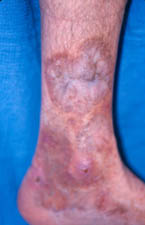
  • Skin abnormalities are very common in PAN and may include purpura, livedo reticularis, ulcers, nodules or gangrene.
  • Skin involvement occurs most often on the legs and is very painful.
Kidney

  • Renal artery vasculitis may lead to protein in the urine, impaired kidney function, and hypertension.
  • Small percentage of patients go on to require dialysis.

Gastrointestinal Tract

  • Abdominal pain, gastrointestinal bleeding (occasionally is mistaken for inflammatory bowel disease)
  • Hemorrhage, bowel infarction, and perforation are rare, but very serious

Heart

  • Clinical involvement of the heart does not usually cause symptoms.
  • However, some patients develop myocardial infarctions (heart attacks) or congestive heart failure.

Eye

  • Scleritis or inflammation in the sclera (white part of the eye)

Genitals

  • Testicular infarction

What causes Polyarteritis Nodosa?

Hepatitis B causes a minority of cases of PAN. With the availability of hepatitis B vaccine now, cases of PAN caused by hepatitis B are now rare in the developed world. It is possible that other infections contribute to other cases of PAN, but links between other infections and this disease remain conjectural at the present time.

How is Polyarteritis Nodosa Diagnosed?

Routine laboratory tests may provide important clues to PAN, but there is no single blood test that is diagnostic of this disease. Most patients with PAN have elevated ESRs. Proteinuria (protein in the urine) is common among those with kidney involvement.

If there is skin or muscle/nerve involvement, a skin or muscle/nerve biopsy can be extremely helpful in coming to a definite diagnosis of PAN. Nerve conduction studies are a non-invasive way of identifying nerves that are involved by the inflammation. (These nerves can then be biopsied to confirm the diagnosis). The diagnosis is confirmed by a biopsy showing pathologic changes in medium-sized arteries. The biopsy site may vary. Most biopsies are taken from skin, symptomatic nerve, or muscle. An angiogram of the abdominal blood vessels may also be very helpful in diagnosing PAN. Aneurysms most often affect the arteries leading to the kidneys, liver or gastrointestinal tract.

The American College of Rheumatology (ACR) has established criteria that should be fulfilled if a patient is to be included in a research study of PAN. The criteria are designed to differentiate PAN from other forms of vasculitis. Not all patients have all criterion. Some, in fact, may have only 2 or 3 criteria, yet their physicians are still comfortable classifying their disease as PAN. A committee of ACR physicians selected 10 disease features (criteria) as being those that best distinguish PAN from other vasculitides. In order to be classified as a PAN patient – for the purpose of research studies – a patient should have at least 3 of the 10 ACR criteria.

The American College of Rheumatology 1990 criteria for the classification of Polyarteritis Nodosa

  1. Weight loss of > 4 kg since beginning of illness
  2. Livedo reticularis
  3. Testicular pain or tenderness
  4. Myalgias, weakness, or leg tenderness
  5. Mononeuropathy or polyneuropathy
  6. Development of hypertension
  7. Elevated BUN or creatinine unrelated to dehydration or obstruction
  8. Presence of hepatitis B surface antigen or antibody in serum
  9. Arteriogram demonstrating aneurysms or occlusions of the visceral arteries
  10. Biopsy of small or medium-sized artery containing granulocytes

Treatment and Course of Polyarteritis Nodosa

Treatment of PAN has improved dramatically in the past couple of decades. Before the availability of effective therapy, untreated PAN was usually fatal within weeks to months. Most deaths occurred as a result of kidney failure, heart or gastrointestinal complications. However, effective treatment is now available for PAN. After diagnosis, patients are treated with high doses of corticosteroids. Other immunosuppressive drugs are also added for patients who are especially ill. In most cases of PAN now, if diagnosed early enough the disease can be controlled, and often cured.

In medical terms, by David Hellmann, M.D.

A discussion of Polyarteritis Nodosa written in medical terms by David Hellmann, M.D. (F.A.C.P.), for the Rheumatology Section of the Medical Knowledge Self–Assessment Program published and copyrighted by the American College of Physicians (Edition 11, 1998). The American College of Physicians has given us permission to make this information available to patients contacting our Website.

Polyarteritis nodosa is a small– and medium–sized arteritis affecting multiple organs, especially the skin, peripheral nerve, gut, kidney, and heart. The age of onset ranges from childhood to late adulthood but averages 40 years. Polyarteritis nodosa has been associated with active hepatitis B, hepatitis C, or both; therefore, the disease is more common in injection drug users.

Polyarteritis nodosa is probably mediated by deposition of immune complexes. Evidence includes the observation that patients with polyarteritis nodosa associated with hepatitis B or hepatitis C have immune complexes consisting of immunoglobulin and viral antigens circulating in the blood and deposited in inflamed vessels. Moreover, antiviral therapy can remit the vasculitis in some of these patients.

The onset is gradual over weeks to months, and the initial symptoms are often nonspecific. The earliest clues that the patient has vasculitis come usually from the skin (where vasculitis may appear as palpable purpura, livedo reticularis, digital gangrene, or tender nodules), or the peripheral nervous system (where infarction of one mixed motor and sensory nerve after another results in mononeuritis multiplex, one of the most specific clues that a patient has vasculitis). Renal involvement eventually develops in most and is accompanied by hypertension in half of patients, whereas Granulomatosis with Polyangiitis
rarely elevates the blood pressure. Polyarteritis nodosa also commonly involves the gut (abdominal angina, hemorrhage, perforation), heart (myocarditis, myocardial infarction), or eye (scleritis). Rupture of renal or mesenteric micoaneurysms can simulate an acute abdomen.

Confirming the diagnosis requires either biopsy specimen showing small– or medium–sized arteries, or mesenteric arteriography showing microaneurysms or alternating areas of stenosis and dilation. Biopsy of a symptomatic nerve or a symptomatic muscle is 65% sensitive, whereas biopsy of an asymptomatic site is less than 30% sensitive. Because mesenteric angiography is 60% sensitive, it should be done when there is not a symptomatic site to biopsy. Renal biopsy should be avoided unless angiography rules out microaneurysms susceptible to rupture.

Without treatment, almost all affected patients die within 2 to 5 years. Treatment with prednisone (starting at 1 mg/kg daily) and cyclophosphamide (2 mg/kg daily) appeared to revolutionize the outcome of polyarteritis nodosa by achieving 70% 10–year survivals and established this combination of agents as the standard therapy. However, newer studies suggest that prednisone alone may achieve the same high survival as prednisone and cyclophosphamide, although flares were less frequent in patients taking cyclophosphamide. Other studies indicate that the traditional therapy with prednisone and cyclophosphamide should be abandoned in patients with polyarteritis nodosa associated with hepatitis B. Patients treated with the traditional combination respond, but almost all survivors become chronic carriers of hepatitis B and may die later of cirrhosis or variceal bleeding. The newly propsed regimen consists of 2 weeks of prednisone to control the vasculitis, followed by plasmapheresis to remove immune complexes, and accompanied by antiviral therapy with lamivudine to rid the patient of the hepatitis B infection. The long–term value of anti–viral therapy for polyarteritis nodosa associated with hepatitis C is not established.
Prednisone

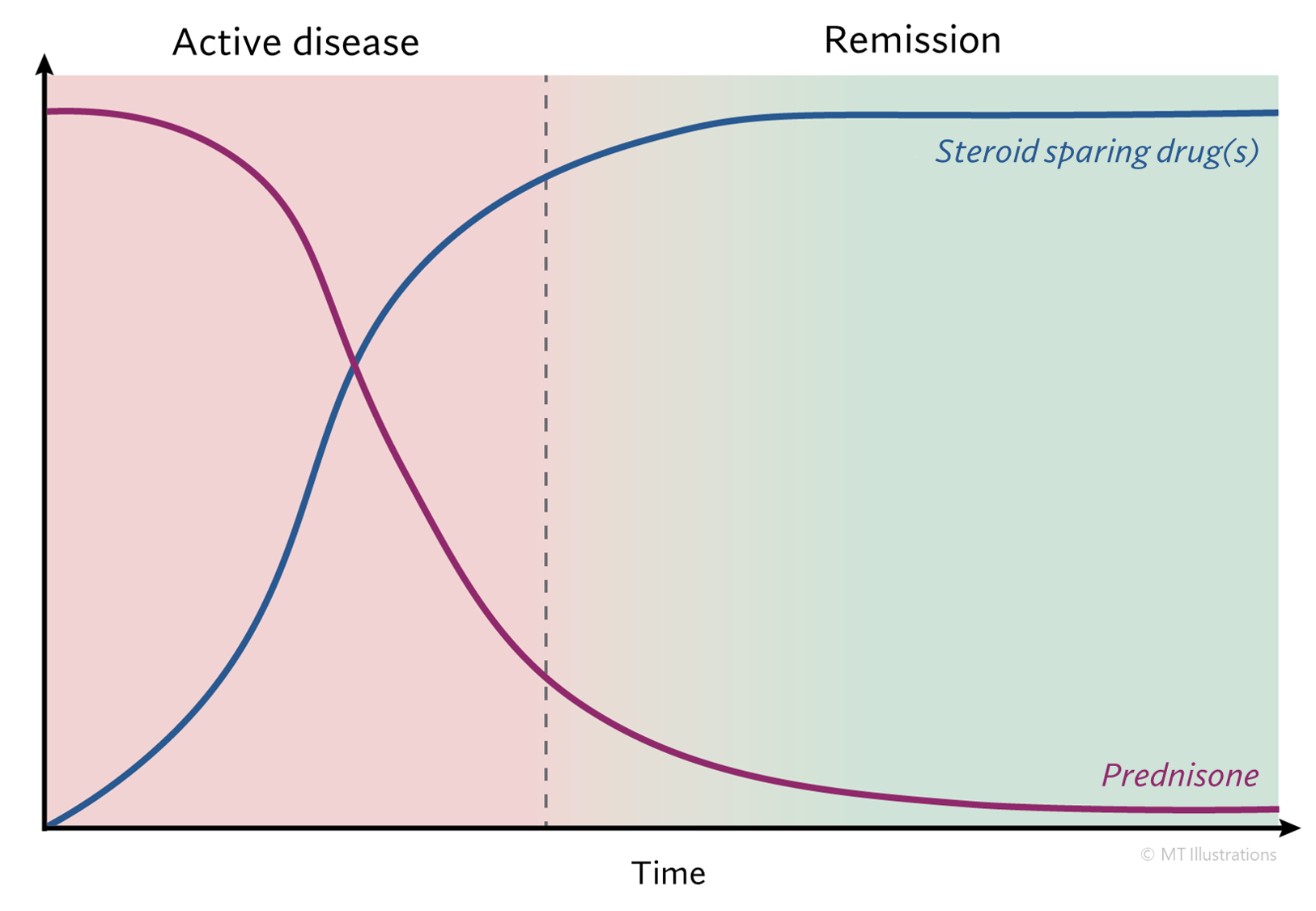
Prednisone is a corticosteroid with potent anti-inflammatory effects. Corticosteroids are a cornerstone of treating most types of vasculitis, and are often used in combination with other immunosuppressive medications. Prednisone works very quickly, and is therefore used (often at high doses) at the time of initial diagnosis to bring vasculitis under control. Then, prednisone is gradually reduced (“tapered”) while another immunosuppressive drug is started for long term treatment. Over time, the “steroid-sparing” immunosuppressive drug is used to control vasculitis, and prednisone is eventually stopped.

Side Effects

Corticosteroids cause a long list of side effects, making it dangerous to use these drugs at significant doses for long term treatment. The side effects of prednisone are related to: 1) the amount of steroid a patient takes in his/her daily dose, and 2) the length of time the patient remains on the medication. We emphasize that not all side effects occur in all patients.

Despite the numerous potential side effects of corticosteroids listed below, their introduction into patient care more than 50 years ago revolutionized the treatment of many diseases, including vasculitis. When used properly, these drugs save lives and avert threats to the function of important organs.

Common Side Effects of Steroids:

  • Increased Susceptibility to Infections
  • Weight Gain
  • Glucose Intolerance
  • Hypertension
  • Bone Thinning
  • Avascular Necrosis of bone
  • Easy Bruising
  • Abdominal Striae
  • Hirsutism
  • Acne
  • Mood Swings/Insomnia
  • Cataracts

Increased Susceptibility to Infections

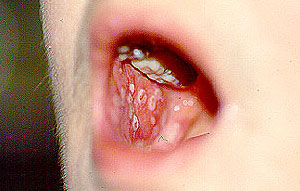
Patients are at increased risk for many types of infections, from minor fungal infections in the mouth (“thrush”, caused by Candida) to life–threatening infections such as Pneumocystis carinii pneumonia. The higher the steroid dose and the longer the duration of therapy, the greater the risk of infection. The risk is also increased when patients receive combinations of immunosuppressive medications, such as cyclophosphamide (cytoxan) and prednisone. The risk of some infections can be greatly reduced by taking specific types of antibiotics prophylactically (such as Bactrim).

Pictured below is woman under treatment with prednisone and methotrexate for vasculitis and a concurrent neurologic condition (myasthenia gravis) developed painful vesicles in her mouth. The vesicles were confirmed by culture to be caused by reactivation of a Herpes simplex infection, and responded to treatment with acyclovir.

Weight Gain

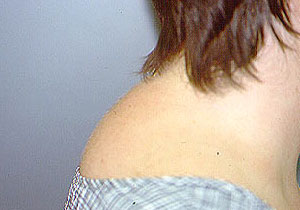
Weight gain is usually the most dreaded side–effects of steroids, incurred to some degree by nearly all patients who take them. The amount of weight gain varies from individual to individual. In addition to causing weight gain, prednisone leads to a redistribution of body fat to places that are undesirable, particularly the face, back of the neck, and abdomen. Pictured below is an example of redistribution of body fat to the back of the neck. Accumulation of fat in this area is sometimes referred to as a “buffalo hump”.

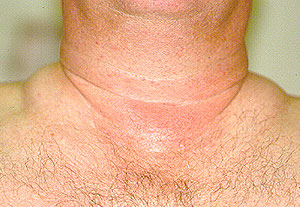
Another example of this “redistribution” is pictured below. Supraclavical “fat pads” are collections of fat at the base of the neck, just above the collarbones, which are common in patients on steroids. They sometimes cause concern among patients if mistaken for lymph nodes or other causes for worry, but will gradually subside as the prednisone dose is tapered to below 10 milligrams/day.

In addition to this redistribution of fat, many patients undergo loss of muscle strength (muscle atrophy) while taking steroids. Regular physical exercise is key to avoiding this type of deconditioning that often occurs with prednisone treatment.

Glucose Intolerance

High blood sugar, or steroid–induced diabetes. Patients who are “pre-diabetic” can develop diabetes and the need for insulin while taking steroids. This usually resolves when the steroids are decreased or discontinued, but can be worsened by weight gain.

Hypertension

High blood pressure. This usually improves as the corticosteroid dose is reduced.

Bone Thinning (Osteoporosis)

Prednisone may cause thinning of the bones even in people who are not usually at high risk for osteoporosis (for example: males, young people). In people susceptible to osteoporosis, prednisone may accelerate the process of bone loss. Fortunately, in the past few years, excellent treatments and preventive measures have become available for osteoporosis. All patients on prednisone for prolonged periods are candidates for these medicines. Patients should be aware of their daily intake of calcium and Vitamin D while on steroids. Bone density measurement is commonly done using DEXA scans.

Avascular Necrosis of Bone

For reasons that are not known, high dose prednisone (for example, greater than 20 milligrams a day) predisposes some patients to joint damage, most often of the hips. In avascular necrosis (or osteonecrosis, meaning “bone death”) of the hip, the part of the leg bone that inserts into the pelvis dies, resulting in pain with weight–bearing and some loss of joint function. Many patients with avascular necrosis require joint replacements.

Easy Bruising

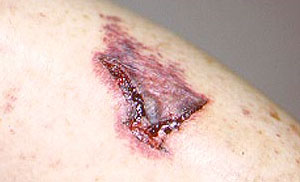
Prednisone also causes “thin skin”. Patients on moderate to high doses of prednisone often notice that they bruise easily, even with only slight trauma. Pictured below is a patient with giant cell arteritis who suffered a skin laceration after she struck her leg against a chair.

Abdominal Striae

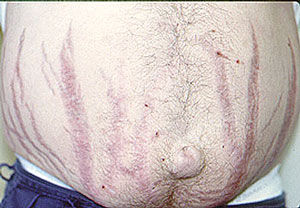
Abdominal striae (“stripes”), as pictured below, frequently occur in patients who take high doses of steroids for long periods of time.

Hirsutism

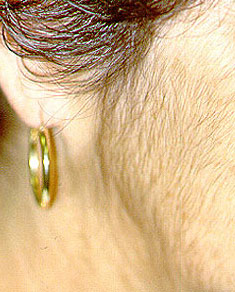
Hirsutism is excessive growth of body hair. Patients vary in the degree to which this side effect of steroids occurs. Although some patients experience minimal hirsutism, the patient depicted below developed this side effect after taking 10 milligrams of prednisone for a few months.

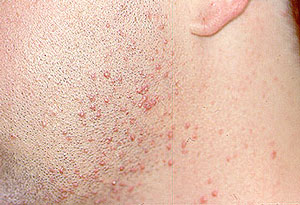
Acne

High dose prednisone predisposes some patients to acne, especially facial acne, as pictured below. The facial acne developed after several weeks of high steroid doses.

Mood Swings/Insomnia

Many patients find it difficult to fall asleep when taking high doses of steroids. Many also find that they are more irritable or anxious than usual. Steroids sometimes even induce depression or psychosis, which usually improves when the drug is decreased or discontinued.

Cataracts

Long–term steroid use may lead to cataract development in the eyes, which frequently require surgical removal.

Cryoglobulinemia

  • Description
  • In medical terms, by David Hellmann, M.D.

The name literally means “cold antibody in the blood”, which refers to the chemical properties of the antibodies that cause this disease: cryoglobulins are antibodies that precipitate under cold conditions. Drug use is a prime risk factor for cryoglobulinemia because more than 90% of cases of cryoglobulinemic vasculitis are associated with hepatitis C infections. Hepatitis C is acquired by injection drug use (needle–sharing), tainted blood products, and (probably rarely), sexual transmission. Treatment of the underlying hepatitis may be an effective therapy for this type of vasculitis.

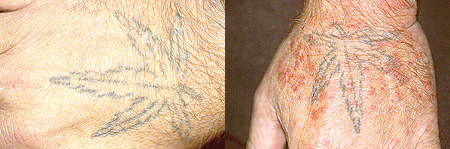
Pictured below is the hand from the same patient at different times. The image on the left is normal and the one on the right shows the patient in the midst of a flare of cryoglobuinemic vasculitis.

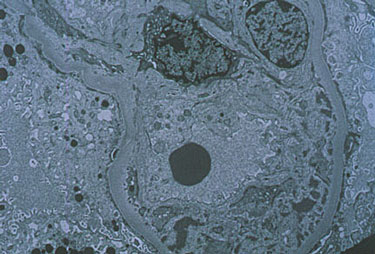
Pictured below is an electron micrograph of a kidney biopsy specimen from a patient with cryoglobulinemia.

In medical terms, by David Hellmann, M.D.

A discussion of Cryoglobulinemia written in medical terms by David Hellmann, M.D. (F.A.C.P.), Co-Director of the Johns Hopkins Vasculitis Center, for the Rheumatology Section of the Medical Knowledge Self-Assessment Program published and copyrighted by the American College of Physicians (Edition 11, 1998). The American College of Physicians has given us permission to make this information available to patients contacting our Website.

Cryoglobulins are immunoglobulins that precipitate in the cold and disolve on rewarming. Three types of cryoglobulins are distinguished based on whether the cryoglboulin is monoclonal and has rheumatoid factor activity. Knowing the type usually allows the physician to predict the clinical features; alternatively knowing the clinical features allows one to deduce the type of cryoglobulin. Type I is a monoclonal antibody that does not have rheumatoid factor activity. Most commonly, type I is associated with lymphoma, Waldenström’s macroglobulinemia, and multiple myeloma. Because type I cryoglobulins do not easily activate complement, patients with type I are asymptomatic until the level of cryoglobulinemia is sufficiently high to cause hyperviscosity syndrome. Both types II and III are rheumatoid factors — antibodies that bind to the Fc fragment of IgG. Therefore, both types are called mixed cryoglobulins. In type II, the rheumatoid factor is monoclonal, whereas in type III it is polyclonal. Type II is associated with lymphoproliferative diseases, and both types can occur in patients with rheumatic diseases and chronic infections. Cryoglobulinemia is said to be essential when there is no identifiable underlying disease. Type II and III cryoglobulinemia frequently presents as vasculitis, most commonly with recurrentlower extremity purpura, glomerulonephritis, and peripheral neuropathy.

It is now evident that most patients diagnosed with type II or type III mixed essential cryoglobulinemia have the disease as an immune response to chronic hepatitis C infection. The role of hepatitis C virus is suggested by finding that the cryoglobulins in these patients are enriched with anti–hepatitis C antibody and hepatitis C RNA. Moreover, antviral therapy can remit the disease in some patients.

Treatment depends on the type of cryoglobulin, underlying disease, and severity of symptoms. Cryoglobulinemia with severe hyperviscosity syndrome requires plasmapheresis and chemotherapy of the underlying malignancy. Some patients with cryoglobulinemia suffer from mild, recurrent crops of lower extremity purpura that require no specific therapy. More extensive vasculitis associated with autoimmune diseases or essential cryoglobulinemia may respond to prednisone, cyclophosphamide, or both. The most effective treatment for cryoglobulinemia associated with hepatitis C has not yet been determined. Brief use of prednisone followed by 6 months of interferon alfa has produced clinical and liver function test improvement, but relapse of liver disease and vasculitis often occurs when interferon alfa is stopped.

Research Information

Research Information

Research and clinical trials are essential for the advance of medicine. The effectiveness of each new breakthrough can only be assessed by putting them into practice with individuals affected by the disease.

For those who care about vasculitis and discovering new ways to identify, diagnose, and treat these diseases, there are many ways to support the advancement of research. Volunteer participation in clinical trials is one way to help progress knowledge about the various types of vasculitis. As a volunteer, your participation can help potentially new, successful treatments become available to others who understand living with vasculitis as you do. For certain non-medication based studies, a volunteer may be any individual who is willing to participate. Volunteers can be spouses, friends and family members who wish to make a difference in vasculitis research.

Open Research Studies

Clinical Epidemiology and serological/plasma and genetic factors in systemic vasculitis

Purpose of Study:

This research is being done to gather information about patients with certain vasculitis diagnoses. The Johns Hopkins Vasculitis Center is building a comprehensive database of information concerning vasculitis patients as part of its mission to facilitate research.

Recruiting patients:

  • Diagnosed with vasculitis
  • Patients of the Johns Hopkins Vasculitis Center

Coordinator/Contact: Hannah Smith
Email: hsmith97@jh.edu
Phone number: 410-550-0122
Principal Investigator: Duvuru Geetha, M.D.
IRB#: IRB00355688

A Randomized, Double-blind, Placebo-controlled Phase 4 Clinical Trial to Evaluate the Long-term Safety and Efficacy of Avacopan in Subjects With Antineutrophil Cytoplasmic Antibody (ANCA)-associated Vasculitis

Purpose of the Study:

This study is to make sure the medicine called avacopan is safe to use for a long time. It will check for liver problems and serious allergic reactions. It will also track the medicine keeps the illness in remission, kidney function, and how the treatment affects daily life.

Recruiting patients:

  • Newly diagnosed or relapse of GPA or MPA
  • Age 18 years or older
  • Positive test for anti-PR3 or anti-MPO (current or historic) antibodies
  • Patients of the Johns Hopkins Vasculitis Center

Coordinator/Contact: Hannah Smith
Email: hsmith97@jh.edu
Phone number: 410-550-0122
Principal Investigator: Duvuru Geetha, M.D.
IRB#: IRB00403470

Frequently Asked Questions about Clinical Trials

From the definition of a clinical trial to information and questions that are good to ask your doctor before participating in a trial, this section address many of the common questions that arise when deciding to join in supporting vasculitis research.

What is a clinical trial?

A clinical trial is a type of research study. Clinical trials test a new treatment and compare it to the available treatment (the usual way doctors treat a certain health condition or disease). For example, a clinical trial might study how well a new medicine helps people with cancer or if certain foods help people stay healthy. The Food and Drug Administration requires clinical trials before a new medication can be approved. Sometimes it is necessary to compare an experimental treatment with a placebo (inactive treatment) when no standard treatment exists.

FDA Consumer magazine published this article “Inside Clinical Trials Testing Medical Products in People” which may assist in understand the purpose, process and procedure of clinical trials from the Food and Drug Administrative’s perspective. 

Why should I take part in a clinical trial?

Because the trials are investigations designed to learn more about a specific disease or treatment, personal benefit cannot be guaranteed. The benefits of taking part in a clinical trial depend on the study you join. The benefits also depend on your assigned study group. Here are some possible benefits you might get from taking part in a clinical trial. You may:

  • get free health exams;
  • learn more about your health;
  • take a more active role in your own health care;
  • have your health watched closely;
  • receive some medications at no cost to you; and help answer research questions that may mean better health for people in the future.

What are the risks of taking part in a clinical trial?

There are risks to you when you take part in a clinical trial. The study doctors and coordinators will watch you carefully for any changes in your health. You are always free to leave the study. The risks will vary depending on the kind of trial you join. Here are some possible risks.

  • You may have side effects (health problems) from taking a new medicine or getting a new procedure that is being tested. There may be side effects that are unexpected. Usually you will need to give blood samples. Some people find that process uncomfortable.
  • The visits for the clinical trial may be frequent and time consuming.

The therapy you receive may not be effective or you may be assigned to a placebo group

How do I know if I have been given all the information I need about taking part in a clinical trial?

When beginning any study the doctor, or investigator, must ask approval from an Institutional Review Board (IRB). The IRB is a committee of doctors and other medical personnel that have no ties to the study. The IRB makes sure the study is as safe as possible and that the “informed consent” explains all of the important information to the patient.

Before people join a clinical trial, they go through something called the “informed consent process”. This process means that you are given written information that tells you about the purpose of the study; risks and benefits of being in the study; and what will happen to you in the study. You will be given an informed consent form, which you will need to read over very carefully. Take the form home and share it with family members, friends, and your primary care doctor. Once you have read the form, ask questions about words or procedures that you don’t understand.

Another part of the informed consent process is that you can ask questions about the study at any time. It is your right to have all the information you need to make your decision about whether or not to take part in a clinical trial. Don’t let anyone pressure you into taking part in a clinical trial. The choice is yours.

What if I decide that I don’t want to be a part of the study, even though the study has already started?

That’s okay. You can change your mind and leave the study at any time. Remember that being a part of a clinical trial is always your choice. Your relationship with your doctor will not change because you decide to leave the study. Your care will not be affected in any way.

Who takes part in clinical trials?

Many different people take part in clinical trials. People who take part in clinical trials are volunteers who meet eligibility criteria for the study. Eligibility criteria are requirements that someone must meet to be a part of the study. Some examples of eligibility criteria are having a certain disease such as Wegener’s Granulomatosis (WG); not showing improvement on standard WG medications; being a certain age; or being in good health. These criteria help make sure that the study answers the right research question.

Is it safe to participate in a clinical trial if trying to conceive a child or pregnant?

Check with your doctor or the study coordinator to find out if it is safe to participate in a particular study if you are trying to conceive, if you are pregnant or postpartum. If the trial is assessing medications, there is often concern about how medicines used in a study could affect a pregnancy regardless of being male or female. The informed consent form should tell you if any of the medicines in the study could affect a pregnancy.

For women, if you are postpartum and breast feeding, check with your doctor to make sure it is okay to breast feed your baby while you are taking part in a clinical trial. Don’t be afraid to ask questions about safety.

How can I find out about clinical trials or other research studies at the Johns Hopkins Vasculitis Center ?

If you would like more information about one of our research activities or if you would like to be a participant, please contact the Johns Hopkins Vasculitis Center.

Vasculitis Treatments

Vasculitis Treatments

While there are many different forms of vasculitis, all share the feature of organ damage caused by the immune system. Therefore, treatments for vasculitis are medications that suppress parts of the immune system (immunosuppressant drugs). The earliest treatment strategies developed for vasculitis involved very broadly-acting immunosuppressive drugs that lower immune system function in a relatively non-specific way. Today, vasculitis patients benefit from more sophisticated modern therapies that target specific portions of the immune system.

General Principles

We use a variety of medications, sometimes in combinations, to treat different forms of vasculitis. Yet a similar general approach is used across these diseases. Active vasculitis causes damage to the organs affected by the disease. We act quickly to stop the inflammation that is present in active disease. When successful, a patient then enters a state of disease remission. During remission, all signs of active inflammation are gone, but there may still be symptoms due to damage in organs where inflammation was previously present.

When disease is in an active state we typically use steroids (prednisone) to bring the disease under control quickly. The amount and type of steroids used depends on the severity of the inflammation present. Generally, steroids are used on a short-term basis to bring the disease under initial control (remission). We avoid long-term use of steroids because of their numerous and serious side effects. Some mild forms of vasculitis do not require any prednisone at all.

Along with the initiation of steroids, we typically start a “steroid-sparing” drug that will be used on a longer-term basis. These steroid-sparing drugs provide the antiinflammatory effect that controls vasculitis, while avoiding the side effects of steroids. Some steroid-sparing drugs are “biologic” medications – drugs that are made from cells, rather than chemicals synthesized in a reaction or extracted from a natural source. Examples of biologic treatments include insulin, vaccines, and blood products. In rheumatology, many biologics are antibodies that have been designed to target specific parts of the immune system. These drugs provide greater specificity than older drugs, therefore helping to reduce side effects. In addition to immunosuppressive drugs, we use some other treatments that are immunomodulatory in function – they have an impact on the immune system, but do not lower immune function in such a way that the risk of infection is increased. Examples of immunomodulatory drugs include colchicine and IVIG.

The first step in treating active vasculitis is to bring the disease into a state of remission. Prednisone impacts the immune system very quickly, and does the bulk of the work to reduce inflammation acutely. Most steroid-sparing drugs take longer to have an effect. After active disease has been adequately treated, our next goal is to reduce and then eliminate steroids, and use the steroid-sparing drug alone to maintain disease remission. Sometimes we are able to switch to milder immunosuppressants to maintain disease remission for longer timeframes. Occasionally, we are forced to maintain the use of prednisone for a longer time, but we always work to minimize the amount of prednisone used in these cases.

Once patients are successfully into remission, we continue using maintenance immunosuppression to keep the disease in a quiet state. The overall duration of therapy depends on many factors, including: the specific type of vasculitis present and its propensity to relapse, the severity and type of organ damage that was present at onset, the extent to which patients tolerate immunosuppression, other medical diagnoses that may be present, and other factors. Most forms of vasculitis have the ability to return to an active state at some point in the future, which is referred to as a relapse or flare of disease. In general, the symptoms that occur during relapses are less severe than those that were present at the beginning of a patient’s illness before immunosuppression had been initiated.

Below you will find information on the specific drugs that we utilize in the management of vasculitis.

Vasculitis medications:

  • Prednisone
  • Avacopan
  • Apremilast
  • Azathioprine
  • Colchicine
  • Cyclophosphamide
  • Dapsone
  • Intravenous or Subcutaneous Immunoglobulin (IVIG/SCIG)
  • Leflunomide
  • Mepolizumab
  • Methotrexate
  • Mycophenolate
  • Rituximab
  • Sarilumab
  • TNF inhibitors
  • Tocilizumab

All information contained within the Johns Hopkins Vasculitis Center website is intended for educational purposes only. Visitors are encouraged to consult other sources and confirm the information contained within this site. Consumers should never disregard medical advice or delay in seeking it because of something they may have read on this website.

Giant Cell Arteritis

  • Description
  • Who gets Giant Cell Arteritis (the “typical” patients)?
  • Classic symptoms of Giant Cell Arteritis
  • What causes Giant Cell Arteritis?
  • How is Giant Cell Arteritis diagnosed?
  • Treatment and Course of Giant Cell Arteritis
  • What’s new in Giant Cell Arteritis?
  • In medical terms, by David Hellmann, M.D.

Description

Giant cell arteritis (GCA) is the most common form of vasculitis that occurs in adults. Almost all patients who develop giant cell arteritis are over the age of 50. GCA commonly causes headaches, joint pain, facial pain, fever, and difficulties with vision, and sometimes permanent visual loss in one or both eyes. Because the disease is relatively uncommon and because the disease can cause so many different symptoms, the diagnosis of GCA can be difficult to make. With appropriate therapy, GCA is an eminently treatable, controllable, and often curable disease. The disease used to be called “temporal arteritis” because the temporal arteries, which course along the sides of the head just in front of the ears (to the temples) can become inflamed. However, we also know that other blood vessels, namely the aorta and its branches, can also become inflammed. The term “giant cell arteritis” is often used because when one looks at biopsies of inflamed temporal arteries under a microscope, one often sees large or “giant” cells.

Who gets Giant Cell Arteritis?

GCA is a disease of older people. The average age at onset is 72, and almost all people with the disease are over the age of 50. Women are afflicted with the disease 2 to 3 times more commonly than men. The disease can occur in every racial group but is most common in people of Scandinavian descent.

Classic Symptoms of Giant Cell Arteritis

The most common symptoms of GCA are headache, pain in the shoulders and hips (called polymyalgia rheumatica), pain in the jaw after chewing (called jaw claudication), fever, and blurred vision. Other symptoms can include tenderness of scalp (it hurts to comb the hair), cough, throat pain, tongue pain, weight loss, depression, stroke, or pain in the arms during exercise. Some patients have many of these symptoms; others have only a few. Blindness — the most feared complication — can develop if the disease is not treated in a timely fashion.

What Causes Giant Cell Arteritis?

We do not know. We do know that aging has something to do with the disease. And we know that the body’s immune system attacks and inflames the arteries. But we do not know why the immune system attack occurs when and where it does.

How is Giant Cell Arteritis Diagnosed?

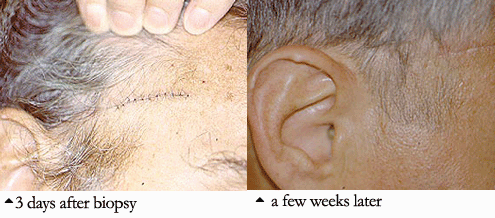
The diagnosis is made by doing a biopsy of the temporal artery. Using a local numbing medication (the same one used by a dentist), the doctor can remove a small part of the temporal artery from under the scalp and look at it under the microscope for evidence of inflammation. A temporal artery biopsy is almost always safe, causes very little pain, and often leaves little or no scar. An example of this is pictured below

There are blood tests that help the doctor decide who is likely to have GCA. Almost everyone with the condition has an elevated erythrocyte sedimentation rate (also called “sed rate”). The sed rate measures how fast a patient’s red blood cells settle when placed in a small tube. In inflammatory conditions, red blood cells settle more quickly than in non–inflammatory states. In addition, most patients with GCA have a slight–anemia, or low red blood cell count. Other conditions can also cause a high sed rate or anemia, so the final diagnosis depends on a temporal artery biopsy.

A few patients with GCA do not have positive biopsies. We now know that GCA does not affect every part of every temporal artery but can “skip” around. When one biopsy is negative, biopsying the temporal artery on the other side can lead to the diagnosis.

Treatment and Course of Giant Cell Arteritis

GCA requires treatment with prednisone, a type of corticosteroid. Typically, treatment begins with 40–60 mg of prednisone, taken by mouth each day. Most patients improve rapidly and dramatically on this dose, with improvement of most symptoms in 1–3 days. Unfortunately, if blindness has occurred as a symptom it is usually irreversible, which only emphasizes the importance of early detection and treatment.

Almost all patients experience side effects from prednisone. After the patient improves, the doctor gradually reduces the prednisone dose. The rate of tapering prednisone depends on how the patient feels, what the doctor finds on exam, and the results of blood tests, including the sedimentation rate. Although virtually all patients are able to reduce their prednisone dose, most require some amount of prednisone for 1–2 years. Longer treatment periods are not uncommon.

In medical terms, by David Hellmann, M.D.

A discussion of Giant Cell Arteritis written in medical terms by David Hellmann, M.D. (F.A.C.P.), Co-Director of the Johns Hopkins Vasculitis Center, for the Rheumatology Section of the Medical Knowledge Self-Assessment Program published and copyrighted by the American College of Physicians (Edition 11, 1998). The American College of Physicians has given us permission to make this information available to patients contacting our Website.

Giant cell arteritis is vasculitis of unknown cause that affects the elderly and is characterized by panarteritis of medium- to large-sized arteries, especially in the extracranial branches of the carotid artery. The average age of onset is 72 years, and women are affected two times as often as men. Irreversible blindness, the most commonly feared complication, results from necrosis of the posterior ciliary branch of the ophthalmic artery and is usually preventable by early diagnosis and corticosteroid treatment.

Giant cell arteritis can begin suddenly or gradually with nonspecific symptoms such as malaise, weight loss, depression, and fatigue or with the classic symptoms of headache, scalp tenderness, jaw claudication, visual changes, or polymyalgia rheumatica. Polymyalgia rheumatica which can occur with or without giant cell arteritis, is characterized by pain and stiffness of the hips and shoulders that worsens in the morning. About one third of patients resemble the preceding patient and present with atypical manifestations such as fever of unknown origin, respiratory symptoms (dry cough is most common), large vessel disease (causing Raynaud’s phenomenon, claudication, or thoracic aortic aneurysm), mononeuritis mutiplex, glossitis, or profound anemia. Although giant cell arteritis accounts for only 2% of all fever of unknown origin, it accounts for 16% of fever of unknown origin in patients over age 65 years and is often associated with rigors and sweats. Only half of patients have enlarged, nodular, or nonpulsatile temporal arteries: normal temporal arteries on physical examination do not exclude the diagnosis. Subclavian bruits, diminished pulses, aoritic regurgitation, or Raynaud’s phenomenon are found in patients with large vessel disease. Fundoscopic examination is normal in the first day or two after blindness develops. Almost all patients have a markedly elevated ESR, averaging about 100 mm/h. Very rarely, the ESR may be normal, especially in patients who are already taking prednisone for allergic or respiratory diseases. MOst patients have mild normochromic normocytic anemia, and 20% to 30% resemble the preceding patient in having mildly elevated serum alkaline phosphatase. The leukocyte count at presentation is usually normal, a point favoring giant cell arteritis over infection or malignancy.

Because blindness from giant cell arteritis is almost irreversible, treatment with 40 to 60 mg of prednisone should be started as soon as the diagnosis is suspected. Although immediate temporal artery biopsy has been preferred, one study suggests that biopsy remains positive within at least the first 2 weeks of corticosteroid therapy. Therapy should not be held pending biopsy. In patients with giant cell arteritis, arterial involvement is patchy: therfore, maximizing the chance of diagnosis requires obtaining a long (3 to 4 cm) segment and examining multiple sections. Positive biopsy specimens show infiltration of the vessel wall with mononuclear inflammatory cells and giant cells, intimal proliferation, and thrombosis. Unilateral biopsy specimens are positive in approximately 85% of patients, and bilateral biopsy specimens are positive in 95%. Patients dramatically improve within 24 to 72 hours of beginning therapy, and the ESR usually normalizes within 1 month. Thereafter, prednisone can be tapered slowly, although most patients require some prednisone for at least 9 months and often longer.

Treatment decisions should probably be based on the patient’s symptoms, the hemoglobin, the ESR: ESR alone should not dictate therapy. Because compression fractures develop in one third of patients, prevention and treatment of osteoporosis should be part of initail management. Methotrexate, azathioprine, and cyclophosphamide have been used in rare patients who do not respond to adequate prednisone. Long–term follow–up is required to detect late recurrences (including the late onset of thoracic aortic aneurysms with aortic regurgitation, congestive heart failure, and aortic dissection). Patients with polymyalgia rheumatica but no symptoms of giant cell arteritis above the neck (such as jaw claudication, headache and visual symptoms) do not need temporal artery biopsy and respond to low–dose prednisone (10 to 20 mg/d orally). Because polymyalgia rheumatica is a clinical diagnosis, other conditions such as hypothyroidism, amyloidosis, rheumatoid arthritis, and malignancy should be considered in the initial evaluation and reconsidered if the patient does not improve rapidly on prednisone.

  • Go to page 1
  • Go to page 2
  • Go to page 3
  • Interim pages omitted …
  • Go to page 6
  • Go to Next Page »

Primary Sidebar


donate to the Johns Hopkins Vasculitis Center

All information contained within the Johns Hopkins Vasculitis Center website is intended for educational purposes only. Visitors are encouraged to consult other sources and confirm the information contained within this site. Consumers should never disregard medical advice or delay in seeking it because of something they may have read on this website.

Footer

Johns Hopkins Rheumatology

  • Johns Hopkins Rheumatology
  • Johns Hopkins Arthritis Center
  • Johns Hopkins Lupus Center
  • Johns Hopkins Lyme Disease Research Center
  • Johns Hopkins Myositis Center
  • Johns Hopkins Scleroderma Center
  • Johns Hopkins Sjögren’s Syndrome Center

Connect With Us

  • Facebook
  • Twitter
  • YouTube
U.S. News and World Report Rankings Badge

Johns Hopkins Medicine Johns Hopkins Medicine logo
Language Assistance Available:
  • Español
  • American Sign Language
  • עִברִי
  • אידיש
  • አማርኛ
  • 繁體中文
  • Français
  • Tagalog
  • Русский
  • Português
  • Italiano
  • Tiếng Việt
  • Ɓàsɔ́ɔ̀-wùɖù-po-nyɔ̀
  • Igbo asusu
  • èdè Yorùbá
  • বাংলা
  • 日本語
  • 한국어
  • Kreyòl Ayisyen
  • العربية
  • Deutsch
  • Polski
  • Ελληνικά
  • ગુજરાતી
  • ภาษาไทย
  • اُردُو
  • فارسی
  • हिंदी
  • Deitsch
  • ខ្មែរ
  • မြန်မာ
Contact & Privacy Information
Price Transparency
Notice of Privacy Practices Privacy Statement
Terms & Conditions of Use Non-Discrimination Notice
Manage Cookie Preferences
Copyright © 2025 Johns Hopkins Rheumatology