
• Skip to primary navigation
  • Skip to main content
  • Skip to primary sidebar
  • Skip to footer

Johns Hopkins Vasculitis Center

Show Search
Hide Search
  • About Our Center
    • Appointments and Directions
    • Meet Our Team
    • Support Our Center
  • What is Vasculitis?
    • Types of Vasculitis
    • Causes of Vasculitis
    • Symptoms of Vasculitis
    • Diagnosing Vasculitis
  • Vasculitis Treatments
    • Prednisone
    • Avacopan (Tavneos®)
    • Apremilast (Otezla®)
    • Azathioprine
    • Colchicine
    • Cyclophosphamide (Cytoxan)
    • Dapsone
    • Supplemental Immunoglobulin (IVIG/SCIG)
    • Leflunomide
    • Mepolizumab (Nucala®)
    • Methotrexate (MTX)
    • Mycophenolate
    • Rituximab
    • Sarilumab (Kevzara®)
    • TNF Inhibitors
    • Tocilizumab (Actemra®)
  • Vasculitis Research
  • Resources
Home / Search for "search.html/treatments/prednisone.html/page/cryoglobulinemia.html"

Search Results for: search.html/treatments/prednisone.html/page/cryoglobulinemia.html

About Our Center

About Our Center

Our center is composed of dedicated physicians, research coordinators and patient care coordinators who serve patients with vasculitis. Many patients who receive these diagnoses have never previously heard the term “vasculitis” or met other patients with the same condition. The vasculitis syndromes (known together as “the vasculitides”) are a group of diseases that can affect every organ system, and occur in people of all ages, genders and backgrounds. Because these diseases are relatively rare and can present in many different ways, the diagnosis of vasculitis is often difficult to reach, and many patients suffer a period of uncertainty prior to finally arriving at a diagnosis of vasculitis. In our mission of serving all patients with vasculitis, we consider the provision of clear and accurate information to be one of our most important responsibilities.

At this Website you will find:

  1. explanations of vasculitis in lay terms
  2. specific discussions of individual diseases
  3. a review of the common therapies for vasculitis
  4. answers to commonly asked questions
  5. information on how to make an appointment to be seen in the Johns Hopkins Vasculitis Center
  6. information about ongoing research at the Johns Hopkins Vasculitis Center
  7. ways in which you can contribute to advancing research and progress in vasculitis.

Please note that this Website is sponsored through the generosity of various friends of the Johns Hopkins Vasculitis Center. We update the Vasculitis Center Website regularly and strive to provide solid, usable information on various types of vasculitis, treatments, and support resources.

Thank you for visiting our Website. We hope you will find it accessible and useful as you learn about these challenging diseases.

Yours truly,

Brendan Antiochos, MD
Assistant Professor of Medicine
Johns Hopkins University School of Medicine,
Division of Rheumatology
Director, The Johns Hopkins Vasculitis Center

Welcome to the Johns Hopkins Vasculitis Center

Welcome to the Johns Hopkins Vasculitis Center

Dear Vasculitis Center Website Visitor:

SEO

Welcome to the Johns Hopkins Vasculitis Center Website. This Website, maintained by the Physicians, Research Coordinators, and Patient Care Coordinators at our Center, is designed to provide information for patients with vasculitis in language that non-medical people can understand. We recognize that many patients with vasculitis have never heard of their disease before they became sick and that, owing to the relative rarity of some types of vasculitis, most physicians have little experience treating the disorders. Few support groups for vasculitis patients exist, and there is a shortage of literature about these diseases written for lay people. Consequently, most patients find reliable information about vasculitis difficult to come by.

At this Website you will find:

  1. explanations of vasculitis in lay terms
  2. specific discussions of individual diseases
  3. a review of the common therapies for vasculitis
  4. answers to commonly asked questions
  5. information on how to make an appointment to be seen in the Johns Hopkins Vasculitis Center
  6. information about ongoing research at the Johns Hopkins Vasculitis Center
  7. ways in which you can contribute to advancing research and progress in vasculitis.

Please note that this Website is sponsored through the generosity of various friends of the Johns Hopkins Vasculitis Center. We update the Vasculitis Center Website regularly and strive to provide solid, usable information on various types of vasculitis, treatments, and support resources.

Thank you for visiting our Website. We hope you will find it accessible and useful as you learn about these challenging diseases.

Yours truly,

Philip Seo, MD, MHS
Assistant Professor of Medicine
Johns Hopkins University School of Medicine,
Division of Rheumatology
Director, The Johns Hopkins Vasculitis Center
Resources

Living with vasculitis can be challenging at times due to the complex nature of the disease and therapies. Also, vasculitis in the general population is quite rare, especially compared to other common medical conditions, such as diabetes and hypertension (high blood pressure). This can make patients with vasculitis feel misunderstood or alone. It can be very helpful for individuals with vasculitis to connect with other patients and their families.

If you have vasculitis, you are not alone. There is a strong community of patients and physicians to support you.

  • Vasculitis Foundation (USA) – www.vasculitisfoundation.org
  • Vasculitis UK – www.vasculitis.org.uk/
  • Vasculitis Foundation Canada – www.vasculitis.ca/
  • American Behcet’s Disease Association
  • Churg-Strauss Syndrome Association
  • Cryoglobulinemia Home Page
  • Arthritis Foundation
  • The American College of Rheumatology
  • European Vasculitis Study Group: EUVAS Homepage

Diagnosing Vasculitis

  • How do we Diagnose Vasculitis?
  • Skin Biopsy
  • Kidney Biopsy
  • Sural Nerve Biopsy
  • Temporal Artery Biopsy
  • Lung Biopsy
  • Brain Biopsy
  • Abdominal Angiogram
  • Central Nervous System Angiogram
  • Other Useful Tests

How do we diagnose Vasculitis?

Patients with vasculitis learn that making the diagnosis is sometimes quite difficult. Many endure numerous doctors’ visits, tests, and hospitalizations before the pieces of the puzzle are assembled. The diagnosis of vasculitis usually requires a biopsy of an involved organ (skin, kidney, lung, nerve, temporal artery). This allows us to ‘see’ the vasculitis by looking under a microscope to see the inflammatory immune cells in the wall of the blood vessel. Although, making a diagnosis of vasculitis can be quite involved, this is very important for two main reasons:

# ONE:  Vasculitis has many MIMICKERS (other diseases that have similar features but require different treatments). It is important to rule out other causes of vascular inflammation, other than a primary autoimmune condition as the management could be different.

# TWO:  The treatments for vasculitis itself involve substantial risk. No physician should prescribe such treatment without making every effort to secure a firm diagnosis.

Blood tests, X–rays, and other studies may suggest the diagnosis of vasculitis, but often the only way to clinch the diagnosis is to biopsy  involved tissue, examine the tissue under the microscope in consultation with a pathologist (ideally one experienced at examining biopsies in vasculitis), and find the pathologic hallmarks of the disease.

If a patient’s symptoms, physical examination, and diagnostic testing suggest involvement of a particular organ, one of the procedures below may be used to confirm (or exclude) the diagnosis of vasculitis:

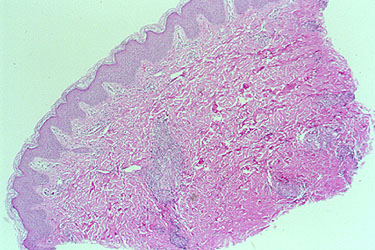
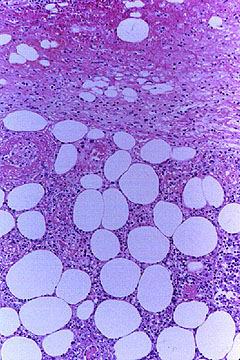
1. Skin Biopsy: One of the least invasive ways of making the diagnosis. A minor procedure performed under local anesthesia. The wound is closed with 1–2 stitches that are removed 7–10 days later.

12

An abnormal skin biopsy showing leukocytoclastic vasculitis. The white oval shapes are subcutaneous fat cells beneath the dermis.

8

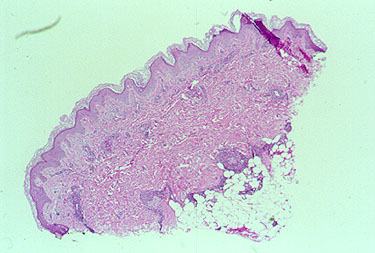
An example of an inadequate skin biopsy.

The correct diagnosis of PAN (polyarteritis nodosa) was not confirmed by this biopsy because the biopsy was not deep enough. The biopsy specimen contains only the epidermis and superficial dermis. PAN classically affects medium–sized arteries located in the deep dermis.

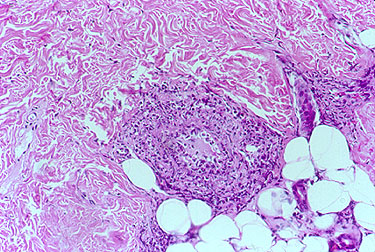
In contrast to the biopsy above, the skin biopsy below was deep enough to include the deep dermis as well as some subcutaneous fat.

5

The white, oval–shaped areas are fat lobules. Just superficial to the subcutaneous fat, within the deep dermis, an inflamed medium–sized vessel is evident.

7

A closer view of the vessel is provided in the next figure which provides a high power view of the vasculitic artery lying at the junction of the dermis and subcutaneous fat.

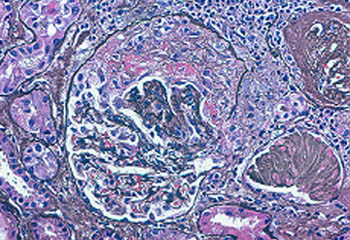
2. Kidney Biopsy: A kidney biopsy will be performed if there is evidence of kidney involvement by vasculitis (red blood cells or protein in the urine, for example). This procedure is done under local anesthesia while the kidney is visualized by ultrasound. Because of the small but significant risk of bleeding after this procedure, patients are usually monitored in the hospital for 24 hours after the biopsy.

6

This biopsy shows a “crescent” in a glomerulus, a feature of glomerulonephritis which can be seen in ANCA-associated vasculitis (GPA or MPA).

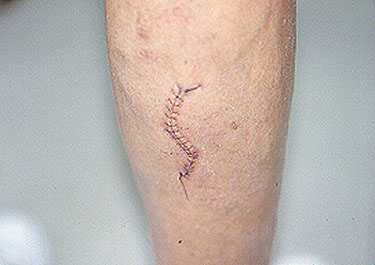
3. Sural Nerve Biopsy: The sural nerve is a sensory nerve over the lateral aspect of the foot. Under local anesthesia in an operating room, a surgeon removes a small piece of the nerve, usually along with a piece of the adjacent muscle (the gastrocnemius). Because the sural nerve does not innervate muscles (remember: it is a sensory nerve, not a motor nerve), the patient does not lose any strength on the side of the foot and lower leg. There maybe, however, some residual numbness on the side of the foot. Patients generally tolerate this numbness well (if the vasculitis has involved the nerve severely enough, some patients already have numbness in that region).

9

Below is the surgical site of a sural nerve and gastrocnemius muscle biopsy one week after the procedure: a few sutures and a thin, well–healing scar.

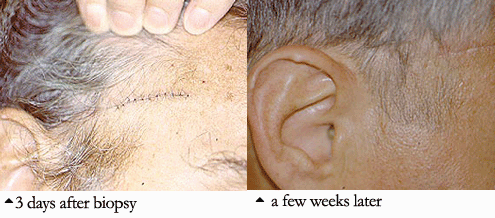
4. Temporal Artery Biopsy: Performed to diagnose Giant Cell Arteritis, also known as Temporal Arteritis, because the temporal artery is often involved. The temporal artery courses up the temples, just in front of the ears. The biopsy, done under local anesthesia, is performed by making a small incision just above the hairline (sometimes shaving a small area of hair is required). The procedure is extremely well–tolerated by patients. Within several weeks, there is usually little or no sign that a biopsy was done. Complications of temporal artery biopsies are extremely rare. Sometimes, to increase the diagnostic yield, both temporal arteries (i.e., the ones on each side of the head) are biopsied.

10

5. Lung Biopsy : Often the best way to make a diagnosis of vasculitis that involves the lungs, such as granulomatosis with polyangiitis (GPA). A lung biopsy may be performed in one of two ways: 1) open lung biopsy, a sizable surgical procedure; or 2) thoracoscopic lung biopsy, a less invasive but still significant procedure. Even a thoracoscopic biopsy usually requires at least 48 hours in the hospital and the temporary placement of a chest tube to permit the lung to re–expand.

6. Brain Biopsy: Often necessary to confirm the diagnosis of Central Nervous System (CNS) Vasculitis. This is usually performed on the non–dominant side of the patient’s brain (that is, if the patient is right–handed — and therefore “left–brained” — the biopsy is performed on the right side of the brain). Biopsy of the brain’s covering, the meninges, is usually performed at the same time.

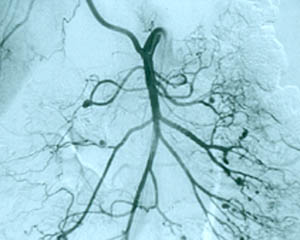
7. Angiogram / angiography: Angiography is helpful in the diagnosis of Polyarteritis Nodosa (PAN). Similar to a heart catheterization,  after inserting a catheter into a large artery in the leg and advancing the catheter into the aorta, radiographic dye is injected into blood vessels supplying the gastrointestinal tract. In the proper clinical setting, the detection of aneurysms (small outpouchings of blood vessel walls) is diagnostic of PAN. This gives an accurate picture of the luminal (inside) anatomy of blood vessels.

1

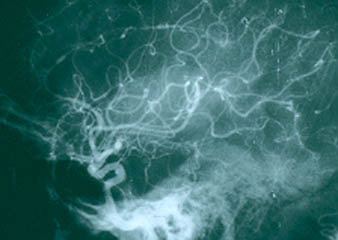
8. Central nervous system angiogram Frequently part of the “work–up” of CNS vasculitis. The procedure is identical to an abdominal angiogram, except the catheter is advanced all the way up to the large vessels supplying the head and neck (for example, the carotid arteries). On angiography, CNS vasculitis is characterized by “beading” (dilated areas alternating with narrowing of the blood vessels). A strikingly abnormal angiogram may eliminate the need for a brain biopsy.

3

The angiogram pictured shows prominent dilations of arteries visible at several sites in the intra–cerebral region.

9. Other Useful Tests: There are many other tests that are helpful in the diagnosis of vasculitis, or in evaluating the activity of the disease:

  • Erythrocyte sedimentation rate (ESR)
  • C–reactive protein (CRP)
  • Urinalysis
  • CT Scan
  • ANCA tests

Erythrocyte sedimentation rate (ESR):  Also known as the “sed rate”, for short. This is an old but useful test first employed by the ancient Greeks as a test for pregnancy. It is important to note that there are several influences on the ESR such as anemia and hypergammaglobulinemia which may have nothing to do with an inflammatory state.

C–reactive protein (CRP): CRP is a protein produced by the liver in response to inflammation within the body.

Urinalysis: Many forms of vasculitis affect the kidneys. A simple way of determining whether or not the kidneys are involved is to perform a urinalysis. By performing checks for several indicators of inflammation in a patient’s urine, the physician may determine if inflammation is present within the kidneys. These indicators include:

  • Protein (“proteinuria”)
  • Red blood cells (“hematuria”)
  • Clumps of red blood cells (“casts”)

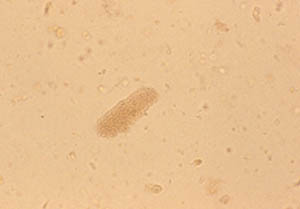
Pictured below is a urine specimen from a patient with Wegener’s granulomatosis and glomerulonephritis (inflammation in the kidneys).

This is a view of the specimen examined under the microscope, showing cylindrical “casts” comprised of red blood cells. This finding strongly indicates vasculitis in the kidney.

2

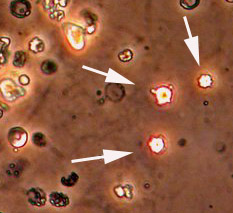
From another Wegener’s granulomatosis patient’s urinalysis, “blebs” (identified by white arrows) protrude from the surface of the red blood cells that have been damaged in transit through the kidney.

Because inflamed kidneys leak blood, red blood cells — dismorphic as these are — appear in the urine.

11

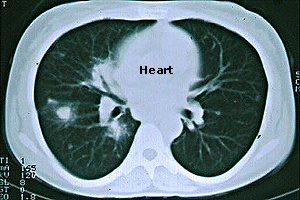
CT Scan (a CAT scan, or computed tomography) — A type of radiology test that permits a non-invasive, cross–sectional view of a patient’s anatomy. On the illustration below (a chest CT scan from a patient with GPA), the view is up (looking toward the patient’s head, from his or her feet). The heart is the white, rounded object in the upper center of the picture. The black regions are the patient’s lungs. The large spot in the left lung (corresponding to the patient’s right lung) is a nodule caused by GPA. Other smaller nodules are also evident.

4


MRI / MRA: MRI is another imaging modality that can be useful for diagnosing and following systemic vasculitis; particularly large vessel vasculitis. MRI allows for visualization of the vessel wall. In vasculitis, the vessel wall may be thickened or edematous.

ANCA tests — ANCA is an abbreviation (acronym) for anti–neutrophil cytoplasmic antibodies. These antibodies are found in the blood of patients with several different types of vasculitis, including Wegener’s Granulomatosis, Microscopic Polyangiitis, and the Churg–Strauss Syndrome. ANCAs and their association with vasculitis were recognized in the mid–1980s, and their use has become increasingly widespread since the 1990s. ANCAs are detected by a simple blood test. These antibodies are directed against the cytoplasm (the non–nucleus part) of white blood cells. Their precise role in the disease process remains uncertain but is a topic of considerable research interest. ANCAs come in two primary forms: 1) the C–ANCA [C stands for cytoplasmic] and, 2) the P–ANCA [P stands for perinuclear]. C–ANCAs have a particularly strong connection to Wegener’s Granulomatosis (up to 80% of patients – and possibly more of those with active disease – have these antibodies). When C–ANCAs are present in the blood of a patient with symptoms or signs suggesting Wegener’s, the likelihood of the diagnosis increases considerably. Because of the long list of other conditions that are sometimes associated with ANCAs, however, in most cases it is still VERY IMPORTANT to biopsy an organ involved by vasculitis to verify the diagnosis.


All information contained within the Johns Hopkins Vasculitis Center website is intended for educational purposes only. Visitors are encouraged to consult other sources and confirm the information contained within this site. Consumers should never disregard medical advice or delay in seeking it because of something they may have read on this website.
Meet Our Team

Vasculitis Center Doctors

Duvuru Geetha, MD

Professor of Clinical Medicine

Dr. Geetha is a Professor of Medicine in the Division of Nephrology. A graduate of Madras Medical College, India, she completed Internal Medicine training in U.K. She did her Internal Medicine Residency at York, PA and Nephrology fellowship at Johns Hopkins Bayview Medical Center. She has been on Hopkins faculty since 1998. She is a member of Royal College of Physicians (U.K.), American Society of Nephrology, American Society of Transplantation and a consultant for the vasculitis foundation. She is a member of the Miller Coulson Academy of Clinical Excellence at Hopkins. Her clinical interests include renal disease in vasculitis patients with a focus on ANCA associated vasculitis and Henoch-Schonlein Purpura. She does clinical and translational research in vasculitis with a focus on ANCA associated vasculitis and renal disease.

Brendan Antiochos, MD

Assistant Professor of Medicine

Dr. Antiochos is a graduate of Dartmouth College and Dartmouth Medical School. He completed internal medicine residency at Oregon Health & Science University, then rheumatology fellowship at Johns Hopkins, before joining the faculty here in 2014. Dr. Antiochos assumed the role of Director for the vasculitis center in 2022. In addition to seeing patients in the vasculitis center, Dr. Antiochos performs laboratory-based research on autoimmune diseases. His laboratory work focuses on activation of the innate immune system and the discovery of novel autoantibodies.

Philip Seo, MD

Associate Professor of Medicine

A graduate of Harvard College and the College of Physicians and Surgeons at Columbia University, Dr. Seo completed his Internal Medicine training as a member of the Osler Medical Service at the Johns Hopkins Hospital. Since then, he has worked at Johns Hopkins in several capacities, including as a hospitalist at Johns Hopkins Bayview Medical Center, and as an Assistant Chief of Service of the Department of Medicine at the Johns Hopkins Hospital, before joining the Division of Rheumatology. His research interests are the assessment and treatment of ANCA-associated vasculitides, including Churg Strauss Syndrome, Wegener’s Granulomatosis, and Microscopic Polyangiitis.

David B. Hellmann, MD

Aliki Perroti Professor of Medicine

Dr. Hellmann is the Chairman of the Department of Medicine and Vice Dean at The Johns Hopkins Bayview Medical Center, and the Aliki Perroti Professor of Medicine. A graduate of Yale University and Johns Hopkins Medical School, Dr. Hellmann received his Internal Medicine training on the Osler Service at Hopkins, and trained in Rheumatology at the University of California, San Francisco. He has been on the Johns Hopkins faculty since 1986.

Desh Nepal, MD

Assistant Professor of Medicine

Michael Cammarata, MD

Assistant Professor of Medicine

Dr. Cammarata is a graduate of The College of William & Mary. He attended Eastern Virginia Medical School and completed his residency in Internal Medicine at the University of California San Francisco. He returned to the east coast for rheumatology fellowship at Johns Hopkins, joining faculty in 2024. He is RhMSUS certified in musculoskeletal ultrasound, and also practices general medicine as a hospitalist at Johns Hopkins Hospital. 

Collaborators

Vasculitis can involve virtually any organ system within the body. Hence, our Vasculitis Center maintains close collaborative relationships with experts from other specialties. The Vasculitis Center includes collaborators from several medical disciplines who help provide the highest level of care for our patients. They have extensive experience managing vasculitis within their subspecialty and work closely with the Physicians in the Vasculitis Center to provide comprehensive care for our patients:

Otolaryngology (ENT):

Our ENT team includes specialists in inflammatory sinus disease, sensorineural hearing loss, and chronic middle ear disease. We are pleased to also have a Doctor of Audiology, Dr. Dinkes, who specializes in inflammatory process on our team as well.

  • Dr. Jean Kim (sinus disease, middle ear manifestations)
  • Dr. Alexander Hiller (upper airway disease)
  • Dr. Roni Dinkes (audiology)

Neuro-ophthalmology:

  • Dr. Andrew Carey

Endocrinology / Osteoporosis:

  • Dr. Han Na Kim

Copyright Information

All information contained within this web site is Copyright © 2012 by The Johns Hopkins University School of Medicine and the Johns Hopkins Vasculitis Center.

All rights are reserved. Requests for use of content contained within this site can be emailed, replies can take a minimum of one business week for reply.

Requests for permission to reprint, reproduce, and distribute documents and related graphics that appear on this website/are hosted on this server may be submitted by fax (410)-550-2072 or e-mail to Wes Linda.

The names of the Johns Hopkins University, the Johns Hopkins University Rheumatology Division, the Johns Hopkins Vasculitis WebSite or its faculty or staff may not be used in publicity or advertising without permission. Exceptions to this include listings on web indexes, search engines, and related systems.

The Johns Hopkins University, The Johns Hopkins University School of Medicine and/or its Division of Rheumatology and faculty and staff of the Johns Hopkins University cannot be held responsible or liable for errors or inaccuracies in transcriptions, translations, or any other type of reproduction, alteration or adulteration of material presented on any page of this web site.

  • « Go to Previous Page
  • Go to page 1
  • Go to page 2
  • Go to page 3
  • Go to page 4
  • Go to page 5
  • Go to Next Page »

Primary Sidebar


donate to the Johns Hopkins Vasculitis Center
All information contained within the Johns Hopkins Vasculitis Center website is intended for educational purposes only. Visitors are encouraged to consult other sources and confirm the information contained within this site. Consumers should never disregard medical advice or delay in seeking it because of something they may have read on this website.
Footer

Johns Hopkins Rheumatology

  • Johns Hopkins Rheumatology
  • Johns Hopkins Arthritis Center
  • Johns Hopkins Lupus Center
  • Johns Hopkins Lyme Disease Research Center
  • Johns Hopkins Myositis Center
  • Johns Hopkins Scleroderma Center
  • Johns Hopkins Sjögren’s Syndrome Center

Connect With Us

  • Facebook
  • Twitter
  • YouTube
U.S. News and World Report Rankings Badge

Johns Hopkins Medicine Johns Hopkins Medicine logo
Language Assistance Available:
  • Español
  • American Sign Language
  • עִברִי
  • אידיש
  • አማርኛ
  • 繁體中文
  • Français
  • Tagalog
  • Русский
  • Português
  • Italiano
  • Tiếng Việt
  • Ɓàsɔ́ɔ̀-wùɖù-po-nyɔ̀
  • Igbo asusu
  • èdè Yorùbá
  • বাংলা
  • 日本語
  • 한국어
  • Kreyòl Ayisyen
  • العربية
  • Deutsch
  • Polski
  • Ελληνικά
  • ગુજરાતી
  • ภาษาไทย
  • اُردُو
  • فارسی
  • हिंदी
  • Deitsch
  • ខ្មែរ
  • မြန်မာ
Contact & Privacy Information
Price Transparency
Notice of Privacy Practices Privacy Statement
Terms & Conditions of Use Non-Discrimination Notice
Manage Cookie Preferences
Copyright © 2025 Johns Hopkins Rheumatology